The Complete Guide to Cabernet Sauvignon: Taste, Profile, and Pairings
This post contains affiliate links. If you click through and make a purchase, I may earn a small commission at no extra cost to you. As an Amazon Associate I earn from qualifying purchases.
If Pinot Noir is the delicate heartbreak grape of the wine world, Cabernet Sauvignon is the undisputed king. It is the most widely planted wine grape on the globe, the backbone of the world’s most prestigious wine regions, and a staple of any elevated lifestyle. Yet, despite its popularity, it is also one of the most misunderstood wines. Because of its bold structure and heavy profile, an improperly paired glass of Cabernet can feel harsh and overpowering. But when served correctly, it transforms a simple meal into a luxurious, memorable experience.
As a WSET-certified wine guide, my goal is to help you remove the intimidation from the wine aisle. You don’t need a sprawling cellar to appreciate a great Cabernet; you simply need to understand how its bold flavors interact with food and temperature.
What is Cabernet Sauvignon?
Cabernet Sauvignon is a full-bodied, dry red wine known for its dark fruit flavors, high tannins, and firm structure. It is made from the Cabernet Sauvignon grape, a natural, centuries-old cross between Cabernet Franc and Sauvignon Blanc, resulting in a complex, savory wine that ages beautifully and pairs perfectly with rich, heavy dishes. Whether you are trying to understand its signature tasting notes, wondering how it compares to your favorite Merlot, or looking for the perfect pairing for a weekend dinner, this guide covers everything you need to know about the king of red wines.
The Cabernet Sauvignon grape is notably hardy. Its thick skin and late-ripening nature make it adaptable across diverse climates, from the cool maritime fog of Bordeaux’s Left Bank to the sun-soaked valleys of Napa. That resilience, combined with its capacity for long aging, is precisely why it has become the world’s dominant red wine grape. According to the OIV (International Organisation of Vine and Wine), Cabernet Sauvignon covers more than 341,000 hectares of vineyards worldwide, making it the most widely planted wine grape on the planet.
What Does Cabernet Sauvignon Taste Like? (The Flavor Profile)
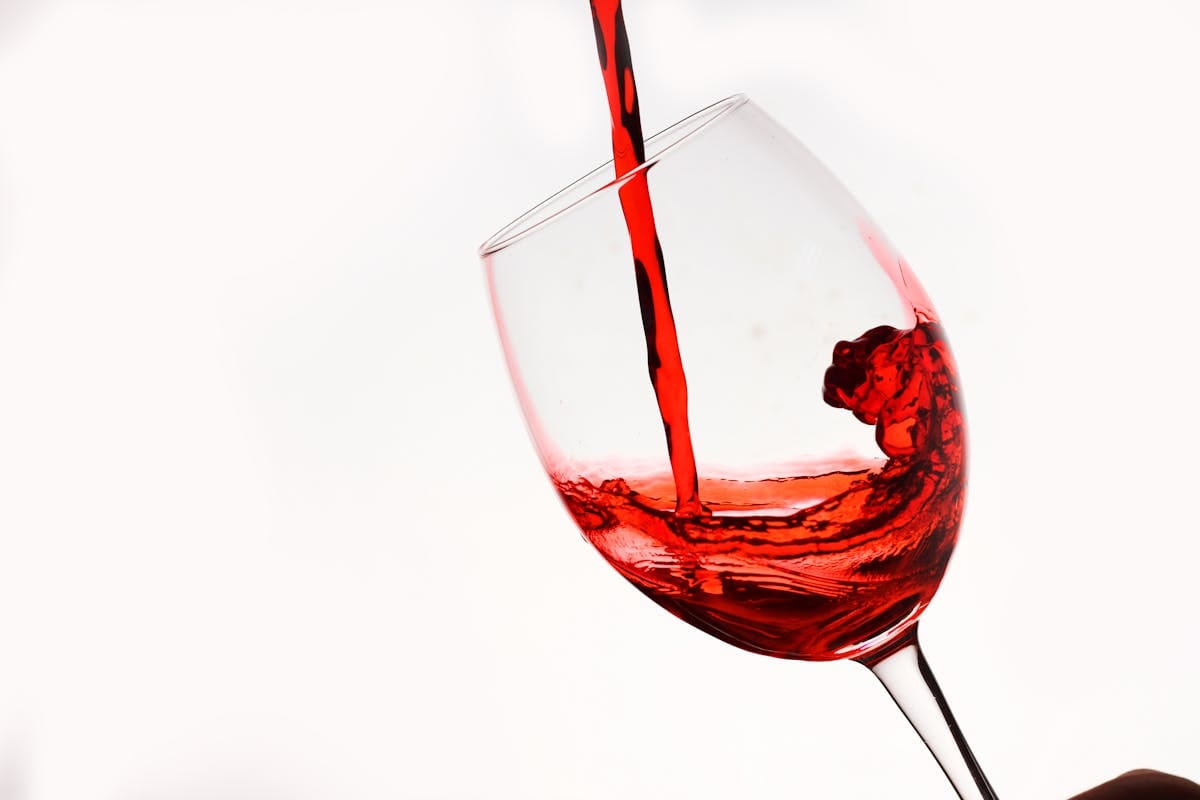
Understanding the flavor profile of Cabernet Sauvignon is the key to choosing the right bottle and pairing it well. The wine’s taste experience is built in three layers: primary fruit character, secondary flavor development, and structural elements that define how it feels in your mouth.
Primary Fruit
The dominant flavors in a glass of Cabernet Sauvignon are built around dark fruit. Black cherry is the most recognizable note, delivering a ripe, concentrated fruitiness that forms the wine’s backbone. Alongside it, you will typically find blackberry and black plum, which contribute to the wine’s deep, almost inky color and dense palate weight. In warmer climate expressions, such as those from Napa Valley or Australia’s Coonawarra region, these fruit notes become more intensely jammy and concentrated.
Secondary Flavors
Beyond fruit, Cabernet Sauvignon develops a range of savory and earthy secondary characteristics. Cedar is a signature note, particularly prominent in Bordeaux-style expressions where the wine spends time aging in French oak barrels. You may also detect baking spices such as vanilla, clove, and cassia, contributed largely by oak aging. Graphite and pencil shavings are classic mineral descriptors associated with aged Bordeaux and high-quality Napa Cabs. One distinctive trait unique to Cabernet Sauvignon is a subtle hint of green bell pepper, caused by the presence of pyrazine compounds, which is especially noticeable in cooler-climate examples from regions like Coonawarra or parts of Bordeaux.
Structure: Full Body and High Tannins
What truly sets Cabernet Sauvignon apart from lighter reds is its structure. This is a full-bodied wine with high tannins, meaning it produces that characteristic drying, gripping sensation on your gums and the back of your palate. Tannins come primarily from the grape’s thick skins and from oak barrel aging. Cabernet Sauvignon also carries high acidity, which provides freshness and balances the richness of its fruit. Together, this structure makes it one of the most age-worthy wines in the world. A well-made Cab from Bordeaux or Napa can evolve beautifully for 15 to 30 years or more.
For those newer to the variety, a helpful starting point is a quality mid-range Californian example, which tends to present the fruit-forward character in a more approachable way before exploring older-world restraint. You can also explore our guide to the best wines for beginners for a gentler introduction to building your palate.
Cabernet Sauvignon vs. Other Popular Reds
Cabernet Sauvignon is often compared to other popular red wines, and understanding the distinctions makes it far easier to choose the right bottle for any occasion. Here is how it stacks up against three of the most common alternatives.
Cabernet vs. Merlot
Of all the comparisons, Cabernet vs. Merlot is the most frequently debated. Both grapes are native to Bordeaux, and they are often blended together in Bordeaux-style wines. The key distinction comes down to tannin structure and body. Cabernet Sauvignon is firmer, more tannic, and more structured, while Merlot is softer, rounder, and more immediately approachable. Where Cabernet delivers black cherry and cedar with a long, drying finish, Merlot tends toward plum, chocolate, and a velvety texture. If you find Cabernet too grippy or assertive, Merlot is a natural stepping stone. If you want more complexity and aging potential, Cabernet is the clear choice. Merlot is also lower in tannins, which means it pairs well with a broader range of foods, though it lacks the power to hold up against truly fatty, richly marbled cuts the way a bold Cab does.
Cabernet vs. Malbec
Both wines are full-bodied and dark-fruited, but they come from very different taste profiles. Malbec, particularly from Argentina’s Mendoza region, delivers a plush, velvety texture with notes of blackberry, blueberry, and violet. It tends to have softer tannins than Cabernet and a more fruit-forward finish with less of the savory, cedar-driven complexity. Cabernet Sauvignon has a more structured, angular profile with higher acidity and more obvious tannins, making it better suited for long aging and richer food pairings. If you are debating between the two, our in-depth post on Malbec vs. Cabernet Sauvignon breaks down the full comparison across flavor, region, and food pairings.
Cabernet vs. Pinot Noir
This comparison highlights two entirely different philosophies of red wine. Cabernet Sauvignon and Pinot Noir occupy opposite ends of the red wine spectrum. Cabernet is bold, tannic, full-bodied, and built for structure. Pinot Noir is elegant, silky, light-to-medium-bodied, and prized for its transparency and terroir expression. Where Cabernet delivers power, the light and delicate Pinot Noir grape delivers finesse. The aromatics differ sharply too: Cabernet brings dark fruit and graphite, while Pinot Noir leans toward red cherry, raspberry, and earthy mushroom notes. For food pairings, Pinot Noir is far more versatile, working well with salmon, duck, and light pasta dishes, whereas Cabernet demands heavier proteins. Neither is objectively better; they simply serve different occasions.
The Best Cabernet Sauvignon Food Pairings
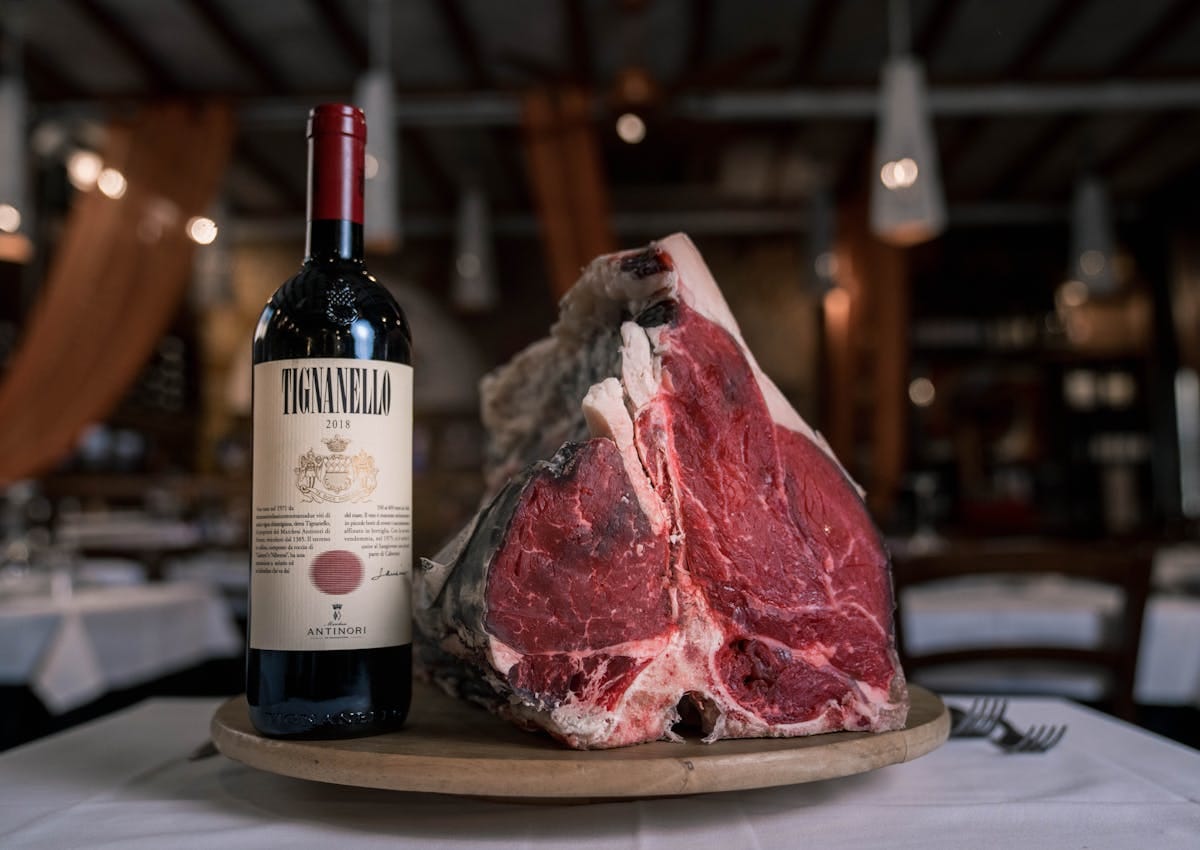
Pairing Cabernet Sauvignon well is less about memorizing a list of rules and more about understanding one central principle: fat and tannins are natural partners. This is the golden rule of Cabernet pairing. Tannins are polyphenolic compounds that bind to proteins. In the mouth, they cause that grippy, drying sensation. But when you combine a tannic wine with a fatty, protein-rich food, the tannins latch onto the fat instead, softening dramatically and allowing the wine’s fruit and complexity to come forward.
You can read more about the broader principles behind this in our guide to the classic rules of wine and food pairing, which covers the fundamental logic behind matching structure, weight, and flavor.
Best Foods to Pair with Cabernet Sauvignon
Ribeye and Prime Rib
These are the gold-standard pairings for a reason. The heavy marbling in a ribeye or the richly roasted fat cap of prime rib provides exactly the kind of fat that softens Cabernet’s tannins. The wine’s dark fruit and cedar notes complement the savory, slightly charred crust of a well-cooked steak brilliantly. If you are opening a special bottle, this is the pairing to reach for.
Mushroom-Based Dishes
Earthy mushrooms share a flavor kinship with the graphite and cedar notes in Cabernet Sauvignon. A beef stroganoff with sauteed cremini or porcini mushrooms, a mushroom risotto enriched with bone broth, or even a mushroom Wellington all work well. The umami depth of mushrooms mirrors the savory complexity of the wine without requiring animal protein.
Aged Hard Cheeses
Aged cheddars and aged gouda are excellent cheese pairings for Cabernet. The crystalized texture and nutty, slightly salty flavor of these cheeses provide the fat and protein needed to tame the tannins, while their intensity does not get lost against the wine’s bold character. Avoid young, fresh cheeses like brie or ricotta, as their delicate flavor will be overwhelmed.
Lamb and Venison
Game meats and fatty cuts of lamb share a natural affinity with bold reds. A slow-braised lamb shoulder or a rack of lamb with fresh herbs will interact beautifully with Cabernet’s savory secondary notes, particularly the herbal and cedar character.
Foods to Avoid with Cabernet Sauvignon
Delicate Fish
Light, flaky white fish and delicate seafood like sea bass, sole, or raw oysters are poor matches for Cabernet. The wine’s tannins will overwhelm the fish’s subtle flavor and create a metallic, bitter aftertaste. This is a classic example of where a light, crisp white wine is the superior choice.
Spicy Foods
Avoid pairing Cabernet with spicy dishes, particularly those with chili heat. Alcohol amplifies the perception of spice, and Cabernet’s typically high alcohol content (often 13.5 to 15 percent ABV) will make a spicy dish feel even hotter. If you enjoy wine with spicy food, a lower-alcohol, slightly sweet wine is a far safer option.
Tangy, Acidic Sauces
Tomato-based sauces with high acidity, citrus-dressed salads, and vinaigrette-heavy dishes can clash with Cabernet’s profile by making the wine taste astringent and harsh. If serving pasta, opt for a red sauce that is slow-cooked and rich rather than bright and sharp.
How to Serve and Store Cabernet Sauvignon
Even the best bottle of Cabernet Sauvignon can disappoint if served at the wrong temperature, in the wrong glass, or without adequate breathing time. Getting these three elements right requires very little effort and makes a substantial difference in the experience.
Serving Temperature
The ideal serving temperature for Cabernet Sauvignon is between 60 and 65 degrees Fahrenheit (15 to 18 degrees Celsius). This is a critical point that trips up many wine drinkers. “Room temperature” is a persistent myth. The phrase was coined centuries ago in Europe, where rooms were considerably cooler than the 68 to 72 degrees Fahrenheit that most modern homes maintain. Serving Cabernet too warm causes the alcohol to volatilize and overwhelm the nose, making the wine taste hot and flat. Thirty minutes in the refrigerator before serving is often all it takes to bring a bottle from room temperature to the ideal range.
Glassware
Use a large, wide-bowl Bordeaux glass for Cabernet Sauvignon. The broad bowl allows the wine to breathe and the wide surface area concentrates and directs its complex aromas toward your nose. Avoid narrow, tulip-style glasses that restrict aeration. The Riedel Bordeaux or the Zalto Bordeaux are both widely recommended options, though any large-bowl red wine glass will deliver a meaningfully better experience than a standard all-purpose glass.
Decanting
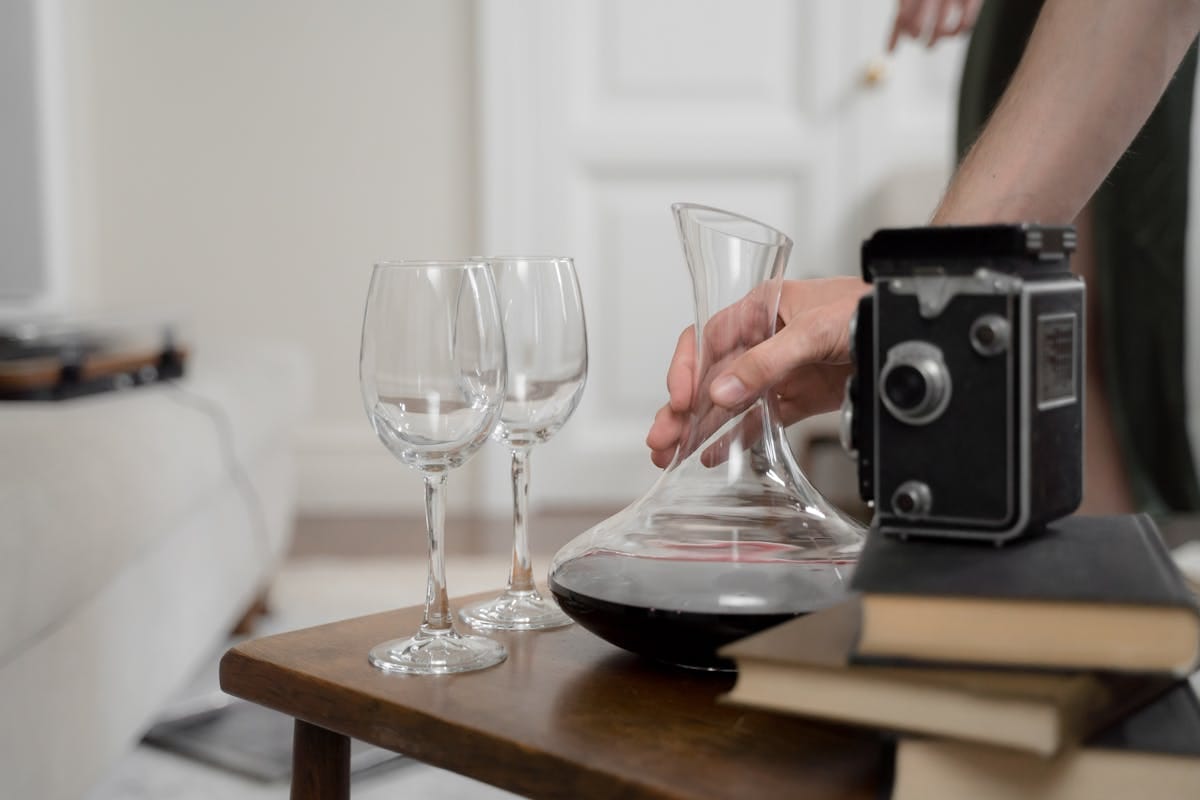
Young Cabernet Sauvignon (anything under about eight years old) benefits greatly from decanting. Pour the wine into a decanter and allow it to breathe for 30 to 60 minutes before serving. This process aerates the wine, softens the tannins, and allows the aromatic compounds to open up. For older Cabs (15-plus years), decant more carefully and for a shorter period, as the wine may have fragile sediment and its aromas can fade quickly once exposed to air.
Storage
For short-term storage, keep unopened bottles on their side in a cool, dark place away from vibration and temperature fluctuations. A basement, wine cooler, or dedicated wine fridge set to 55 degrees Fahrenheit is ideal. Once opened, a recorked bottle will keep for two to four days in the refrigerator; the cold will slow oxidation. For premium Cabs intended for aging, a temperature-controlled wine fridge is worth the investment. Given Cabernet’s substantial aging potential, a well-stored bottle can continue improving for a decade or more.
Cabernet Sauvignon by Region: What to Expect
One of the most fascinating aspects of Cabernet Sauvignon is how dramatically its character shifts based on where the grapes are grown. The same grape variety produces distinctly different styles depending on climate, soil, and winemaking tradition.
Bordeaux, France
The ancestral home of Cabernet Sauvignon produces wines of remarkable structure, restraint, and longevity. Bordeaux Cabernets are typically blended with Merlot, Cabernet Franc, and Petit Verdot, adding complexity and softening the tannins. Expect earthy, cedar-driven, and cassis-forward profiles with a lean, minerally character. These wines are built to age and rarely show their full potential before ten years.
Napa Valley, California
California Cabernet is a study in ripe abundance. The long, warm growing season produces wines with intense black fruit, high alcohol, and generous oak. Napa Valley Cabs from producers like Opus One, Stag’s Leap, and Caymus are among the most sought-after in the world. Compared to Bordeaux, they are more approachable when young, with rounder tannins and richer, more opulent fruit. Expect chocolate, cassis, and mocha notes alongside the signature cedar backbone.
Coonawarra, Australia
Australia’s Coonawarra region, situated over a distinctive terra rossa (red clay over limestone) soil, produces a distinctive style of Cabernet with pronounced minty, eucalyptus notes alongside the core dark fruit. Penfolds Bin 707 is the benchmark. These are powerful, structured wines with more austerity than Napa but less earthiness than Bordeaux.
Maipo Valley, Chile
Chilean Cabernet from the Maipo Valley offers exceptional value. The dry, sunny climate and alluvial soils produce clean, fruit-forward Cabs with softer tannins and a more approachable profile. These wines are excellent everyday options that punch well above their price point. If you are building a palate for Cabernet without committing to premium price points, Chilean examples are a reliable starting point. You can also explore the broader wine and culinary pairing world for more context on how regional styles shape food compatibility.
Frequently Asked Questions
Is Cabernet Sauvignon a sweet or dry wine?
Cabernet Sauvignon is a dry red wine. It has very little to no residual sugar. While it is packed with dark fruit flavors like blackberry and black cherry, the high tannins and acidity give it a decidedly dry, savory finish rather than a sweet one. The perception of fruitiness can sometimes be mistaken for sweetness, particularly in riper, warmer-climate expressions, but technically the wine remains dry. If you are looking for a red wine with actual sweetness, you would need to seek out a fortified wine or a specific off-dry style, neither of which describes Cabernet Sauvignon.
What is the difference between Cabernet and Cabernet Sauvignon?
In the wine world, “Cabernet” is almost always used as shorthand for Cabernet Sauvignon. However, it can occasionally refer to Cabernet Franc, which is a lighter, more herbaceous parent grape of Cabernet Sauvignon. Cabernet Franc is softer, lower in tannins, and tends toward red fruit, tobacco, and violet notes rather than Cabernet Sauvignon’s bold dark fruit and cedar. On a wine list, if a label simply says “Cabernet” without further specification, it is almost certainly Cabernet Sauvignon. When in doubt, ask your sommelier or check the back label for the specific grape variety.
Should Cabernet Sauvignon be chilled?
Cabernet Sauvignon should not be chilled like a white wine, but it should not be served warm, either. The ideal serving temperature is between 60 and 65 degrees Fahrenheit (15 to 18 degrees Celsius), which is slightly cooler than standard room temperature. Serving it too warm will make the alcohol taste harsh and mute the wine’s more nuanced aromatics. The easiest approach is to pop the bottle in the refrigerator for 20 to 30 minutes before you plan to open it. This simple step consistently improves the experience without requiring any specialized equipment.
How long does Cabernet Sauvignon last once opened?
Once opened, a bottle of Cabernet Sauvignon will typically remain enjoyable for two to four days when re-corked and stored in the refrigerator. The cold temperature slows oxidation, which is the main cause of a wine going flat or vinegary. On the counter at room temperature, you may notice degradation within 24 hours, particularly in higher-alcohol examples. A wine preservation pump or inert gas spray can extend the window to four or five days. The wine will not “go bad” in the sense of becoming harmful, but the fruit character will fade and the tannins can become more pronounced as it oxidizes.
What is the best Cabernet Sauvignon for beginners?
For beginners, a fruit-forward, mid-range Californian or Chilean Cabernet Sauvignon is usually the most approachable entry point. Look for bottles from Napa Valley at the $20 to $30 price point, or from Chile’s Maipo Valley for excellent value under $20. These tend to be more immediately accessible than old-world Bordeaux styles, which require time to open up and can feel austere without proper decanting. Our guide to the best wines for beginners includes specific bottle recommendations across price points, which is a useful complement to this guide if you are just starting to explore the world of red wine. You might also find the comparison between Gewurztraminer vs. Riesling helpful if you are simultaneously exploring whites to balance your cellar.
Want to build confidence in your wine choices? Download The Luxe Living Starter Guide for a curated breakdown of wine basics and elegant living habits.
Continue Exploring Luxury
Everything you need for wine, food and entertaining, in one place.
📖 Get the Free Luxe Living Starter Guide