Prosecco vs Champagne: How They Differ
This post contains affiliate links. If you click through and make a purchase, I may earn a small commission at no extra cost to you. As an Amazon Associate I earn from qualifying purchases.
Prosecco and Champagne are both sparkling wines, but they come from different countries, different grapes and a different way of making the bubbles. Champagne is French, made mostly from Chardonnay, Pinot Noir and Meunier, and gets its bubbles from a second fermentation inside each bottle followed by at least 15 months of aging. Prosecco DOC is Italian, made mainly from the Glera grape, and gets its bubbles in large pressure tanks in as little as 30 days. That is why Prosecco tastes fresher and fruitier and usually costs less, and Champagne tastes richer and more toasty.
This guide puts the two side by side so you can pick the right bottle for a toast, a brunch or a dinner. Every rule and figure below comes from the official bodies for each wine, the Prosecco DOC Consortium and the Comité Champagne.
- Prosecco vs Champagne at a glance
- Where each wine comes from
- How the bubbles are made
- The grapes
- How long each is aged
- Taste and sweetness labels
- How to serve them
- Which one to choose
- Prosecco vs Champagne FAQ
Prosecco vs Champagne at a Glance
| Prosecco DOC | Champagne | |
|---|---|---|
| Country | Italy | France |
| Main grapes | Glera | Chardonnay, Pinot Noir, Meunier |
| Where the bubbles form | Large pressure tanks (autoclave) | Inside each bottle |
| Minimum time for the bubbles or aging | At least 30 days of second fermentation (60 for Rosé) | At least 15 months in the cellar (3 years for vintage) |
| Alcohol (Spumante listing) | 11.00% vol | Stated on every label |
| Typical taste | Fresh, fruity, floral | Richer, with toasty and bready notes |
| Bottles in 2025 | 667 million bottled | 266.1 million shipped |
Where Each Wine Comes From
Champagne can only come from the Champagne region of France. The Comité Champagne counts 34,200 hectares under production across 319 villages, worked by 16,460 growers, 120 cooperatives and 410 houses. The name is protected, which is why sparkling wine made elsewhere, even by the same method, cannot be called Champagne. Our guide to almond champagne brands explains why some American bottles still carry the word.
Prosecco DOC comes from a defined area of northeastern Italy, and the consortium is based in Treviso in the Veneto. Each batch is checked by the Valoritalia control body before bottling, with chemical and tasting analysis against the production rules, according to the consortium’s winemaking page.
How the Bubbles Are Made
Both wines go through two fermentations. The first turns grape juice into a still wine. The second traps carbon dioxide in the wine, and that is where the bubbles come from. The difference is where the second fermentation happens.
Champagne: after a first fermentation in tanks, the wine is bottled and the second fermentation, called the prise de mousse, happens inside each bottle. This is the Méthode Champenoise described by Champagne.fr. The wine then rests on its yeast in the bottle, which is where the bready, toasty notes come from.
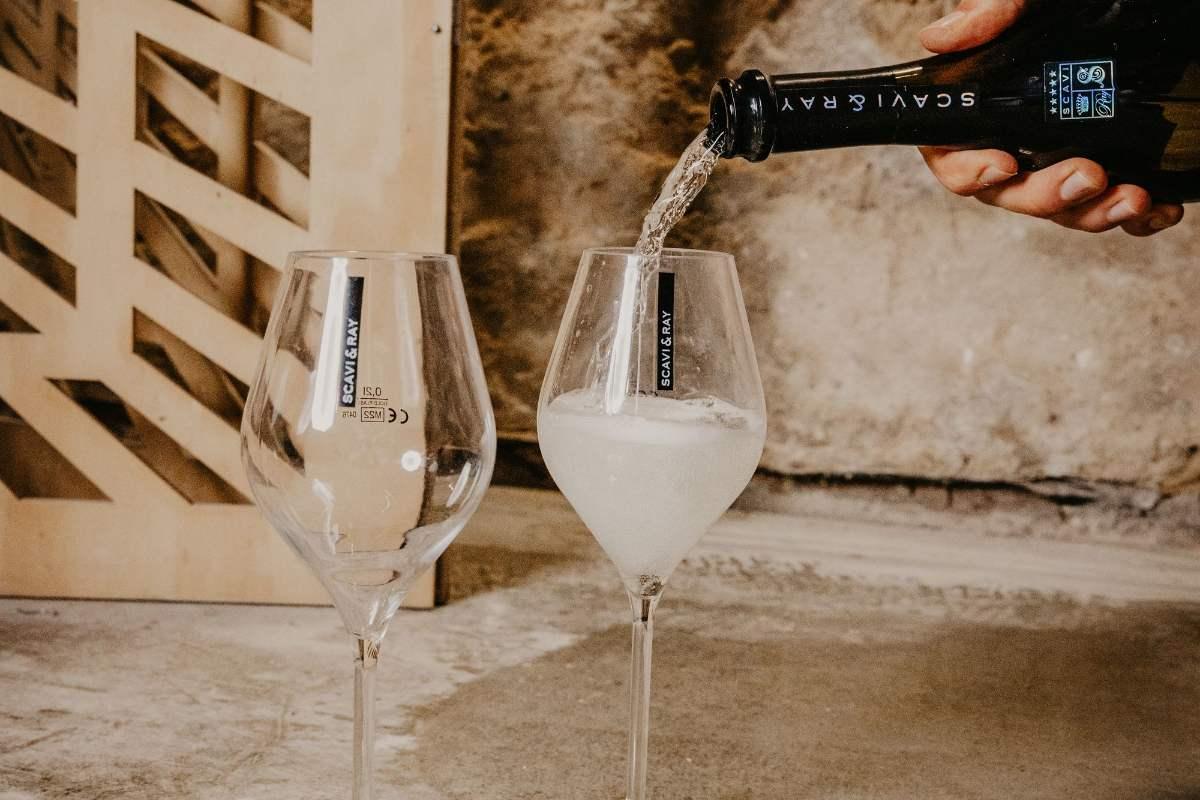
Prosecco: the second fermentation uses the Martinotti method. The wine is held in large tanks called autoclaves, and the second fermentation lasts at least 30 days for Frizzante and Spumante and at least 60 days for Rosé, according to the Prosecco DOC Consortium. A temperature control system lets the winemakers keep the sugar level where they want it. The tank method keeps the fresh fruit of the grape at the front.

The Grapes
Champagne is a blended wine. The most used grapes are Chardonnay, Pinot Noir and Meunier, according to Champagne.fr, and the region’s vineyards are 38% Pinot Noir, 32% Chardonnay and 30% Meunier, per its 2025 key figures. Pinot Noir and Meunier are black grapes, yet most Champagne is pale, because the juice runs off the skins quickly in the press.
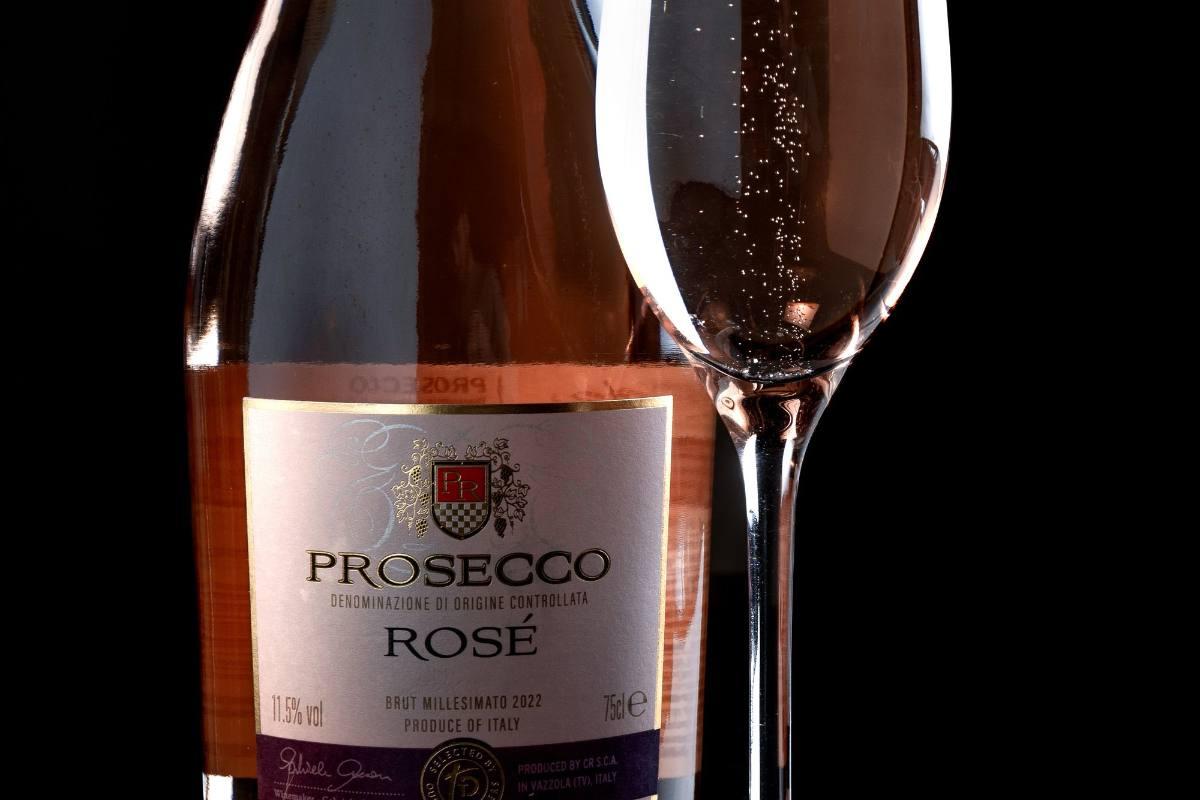
Prosecco DOC is built on the Glera grape. For Prosecco DOC Rosé, red Pinot Noir wine is blended in at 10 to 15% with Glera, which gives the pale pink color, as the consortium explains. If you like the softer side of sparkling wine, our Moscato d’Asti guide covers another light Italian sparkler.
How Long Each Is Aged
This is the biggest reason for the gap in price and taste. Under the Champagne rules, non vintage Champagne must age in the cellar for at least 15 months and vintage Champagne for at least 3 years, from the date of bottling, and Champagne.fr notes that most producers age it a few years longer. It also takes about 1.2 kg of grapes to make one bottle.
Prosecco is made to be drunk young. The minimum second fermentation is 30 days, or 60 days for Rosé, and the consortium notes that a longer sparkling process gives the Rosé more stability and roundness.
Taste and Sweetness Labels
Prosecco DOC Spumante is described by the consortium as straw yellow with a fine, persistent bubble, a fresh taste and aromas typical of the grape, at 11.00% alcohol. Champagne usually tastes fuller, with bready and toasty notes that come from its long rest on the yeast in the bottle.
Both use sweetness words on the label, and they can be confusing for beginners:
- Brut Nature and Extra Brut: the driest styles.
- Brut: dry, the most common style for both wines.
- Extra Dry: despite the name, a little sweeter than Brut.
- Dry and Demi sec: noticeably sweeter, good with dessert.
The Prosecco list comes from the consortium’s types page, and Champagne labels must state the sugar level, per Champagne.fr. For more on how sugar changes a wine, see our best sweet wine for beginners guide.
How to Serve Them
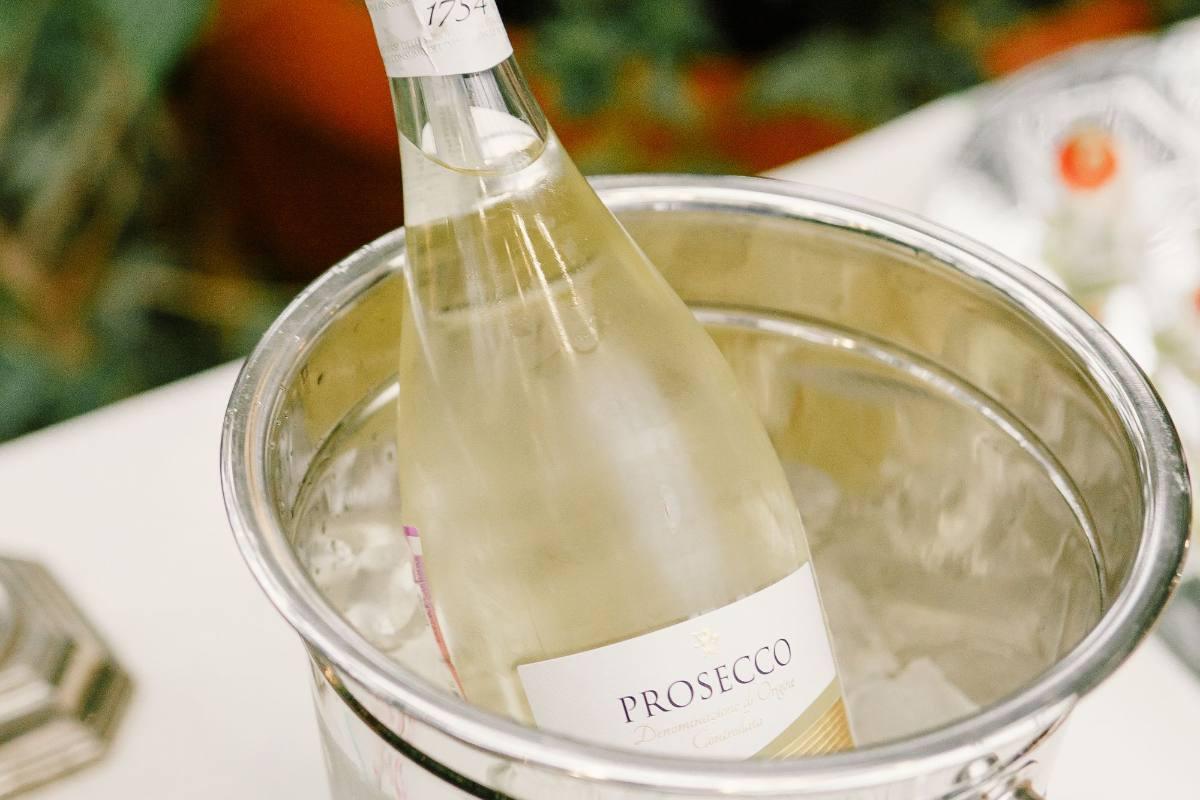
Serve both chilled but not ice cold. Champagne.fr recommends about 8 to 10°C, roughly 46 to 50°F. To get there, put the bottle in an ice bucket half filled with water and ice for 20 to 30 minutes, or in the bottom of the fridge for a few hours. Hold the cork firmly when you remove the wire cage. For unopened bottles you plan to keep, Champagne.fr advises a cool place at a steady 10 to 15°C, away from light and vibration.
If you do not finish the bottle, our guide on how to store sparkling wine after opening shows how to keep the bubbles for another day.
Which One to Choose
Choose Prosecco for brunch, spritz style cocktails, a large party or any time you want a light, fruity sparkler. Its fresh style suits salty snacks and lighter starters.
Choose Champagne for a special toast, a dinner where the wine is part of the meal, or rich foods such as fried dishes and creamy cheeses, where its fuller body and toasty notes hold up. Our wine and cheese pairing guide has more matches.
If you want a sweeter sparkler for dessert, look for a Demi sec of either wine, or read our dessert wine guide. And for American bottles made the same way as Champagne, see our list of sparkling wine in Napa Valley. To see how sparkling wine fits with the other styles, start with our guide to the types of wine.
Prosecco vs Champagne FAQ
Is Prosecco a type of Champagne?
No. Champagne is a protected name for sparkling wine from the Champagne region of France, and Prosecco DOC is an Italian sparkling wine with its own rules set by the Prosecco DOC Consortium. They are two separate wines.
Which is sweeter, Prosecco or Champagne?
Both come in a range from very dry to sweet. Prosecco DOC Spumante can be labeled Brut Nature, Extra Brut, Brut, Extra Dry, Dry or Demi sec, as the consortium lists, and Champagne labels must state the sugar level too, according to Champagne.fr. Read the label: Brut is dry for both, and Extra Dry Prosecco sits on the sweeter side of Brut.
Why does Champagne usually cost more than Prosecco?
The making is slower. Champagne has its second fermentation in each bottle and must then age at least 15 months for non vintage and 3 years for vintage, according to Champagne.fr. Prosecco DOC has its second fermentation in large tanks for at least 30 days, as the consortium explains. Champagne is also made in smaller amounts: 266.1 million bottles shipped in 2025 against 667 million bottles of Prosecco DOC.
Can I use Prosecco instead of Champagne in a cocktail?
Yes, in most sparkling cocktails either works. Prosecco brings the fruit and floral notes the consortium describes, while Champagne gives the toasty notes that come from its long aging on the lees.
What temperature should I serve them at?
Serve both chilled but not ice cold. Champagne.fr gives about 8 to 10°C, roughly 46 to 50°F, and suggests 20 to 30 minutes in an ice bucket half filled with water and ice. The same range suits Prosecco well.
Continue Exploring Luxury
Everything you need for wine, food and entertaining, in one place.
📖 Get the Free Luxe Living Starter Guide