Sous Vide vs Crock Pot: Key Differences Explained
This post contains affiliate links. If you click through and make a purchase, I may earn a small commission at no extra cost to you. As an Amazon Associate I earn from qualifying purchases.
The main difference between sous vide vs crock pot cooking is temperature control. A sous vide machine holds a water bath at one exact temperature, so a steak set to 131°F comes out medium rare from edge to edge, while a crock pot heats food in a covered pot at a low but broad range, generally between 170°F and 280°F according to the USDA. Choose sous vide for steaks, chops and chicken breasts cooked to a precise doneness. Choose a crock pot for soups, chili, stews and tough cuts of meat that you want soft and saucy with minimal effort.
Both are slow cooking methods, and both let home cooks walk away for hours. They solve different problems, though, and many home chefs end up owning both. This guide compares the cooking process, food safety, equipment and the dishes each one does best.
In This Guide
- How Each Cooking Method Works
- Sous Vide vs Crock Pot at a Glance
- Temperature Control and Texture
- Tough Cuts, Pulled Pork and Large Roasts
- Equipment and Convenience
- Food Safety for Both Methods
- Which Is the Better Choice for You
- FAQ
How Each Cooking Method Works
Sous vide means sealing food in a plastic bag and cooking it in a water bath kept at the exact temperature you want the center of the food to reach. A sous vide device, usually an immersion circulator clipped to a pot or a sous vide container, heats and circulates the water. Because the water never gets hotter than the target, the food cannot overshoot it. Most foods are seared or browned after the bath, since water alone does not create a crust. Our sous vide cooking guide covers the basics of the sous vide technique in more detail.
A crock pot is a slow cooker: a ceramic or metal insert in a countertop appliance with an electric heating element. Crock-Pot is a brand name, but most people use it for any slow cooker. The USDA explains that the direct heat from the pot, the long cooking time and the steam trapped under the tight lid work together to cook food safely. Most models have two or more heat settings, usually Low and High, and foods cook faster on High.
The key difference is what each one controls. A sous vide machine controls the temperature of the food. A slow cooker controls the heat level going into the pot, and the food keeps rising in temperature for as long as it cooks.
Sous Vide vs Crock Pot at a Glance
| Feature | Sous Vide | Crock Pot (Slow Cooker) |
|---|---|---|
| How it heats | Water bath held at one set temperature | Electric heating element under a covered pot |
| Cooking temperature | You choose the exact temperature, for example 129°F to 134°F for medium rare steak | Low and High settings, generally 170°F to 280°F |
| Level of precision | Very high, food cannot pass the set temperature | Low, food keeps cooking as long as the pot is on |
| Typical cooking time | 1 to 4 hours for steak, 18 to 24 hours for pork shoulder | Set by the recipe and the setting, often most of a day on Low |
| Best foods | Steaks, pork chops, chicken breasts, fish, large roasts cooked to a set doneness | Soups, stews, chili, beans, braises, tougher meats in liquid |
| Extra equipment | Circulator, container, bags, ideally a vacuum sealer | None beyond the cooker |
| Finishing step | Usually a sear in a hot pan or oven | Usually none, food is served from the pot |
| Sauce | Only the juices in the bag | Built in, the liquid becomes the sauce |
Temperature Control and Texture
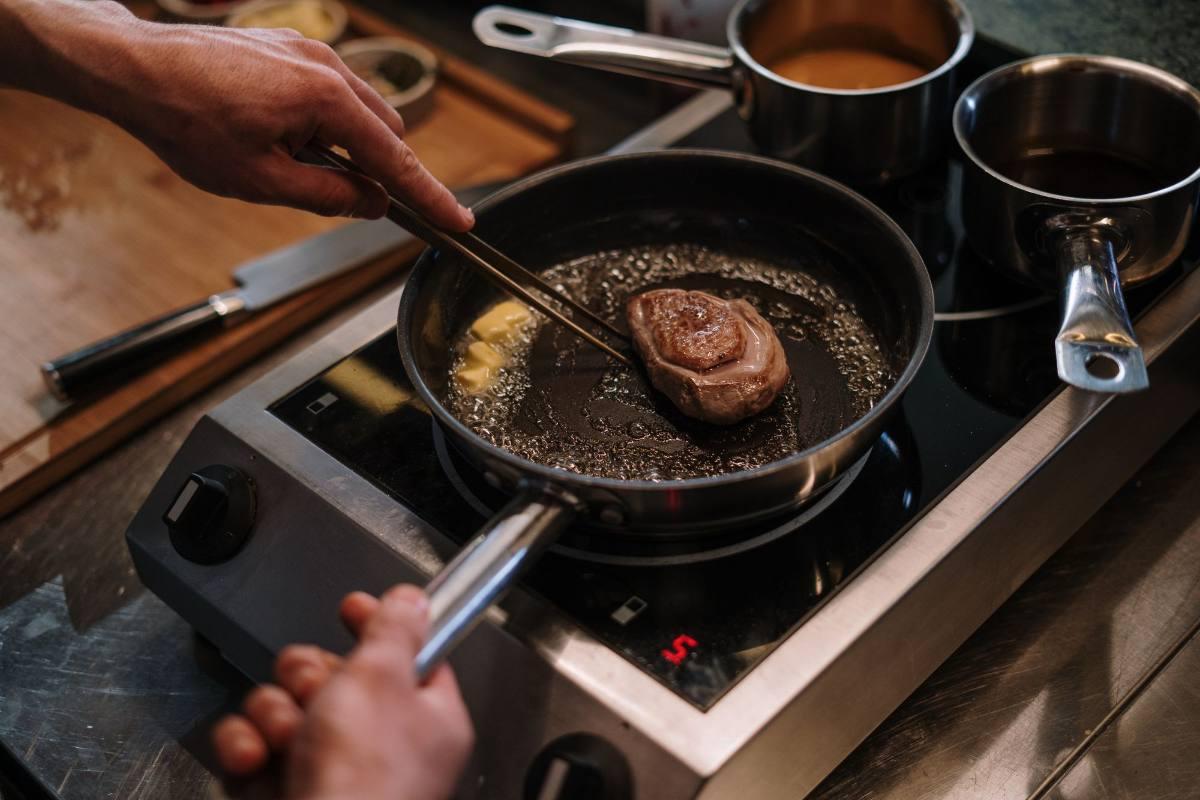
Precise temperature control is where sous vide pulls ahead. In Serious Eats’ sous vide steak guide, medium rare steak is cooked at 129°F to 134°F for 1 to 4 hours, and medium at 135°F to 144°F for the same window. The guide also notes that steaks cooked below 130°F should not stay in the bath longer than two and a half hours, for food safety reasons. Within those limits, an extra hour of cooking time changes very little, which is why sous vide is so forgiving for home cooks.
Pork chops show the same level of precision. Serious Eats’ sous vide pork chops recipe gives 140°F as a juicy medium rare and 160°F as well done, and limits cook times to under four hours, because the meat starts to lose its texture after that and can be pulled apart by eight hours.
A slow cooker works the other way around. Its low temperature is still well above the doneness temperature for a steak or a chicken breast, so lean meats cooked for hours in a crock pot pass well done and turn dry or stringy. The USDA points out that this low heat is what helps less expensive, leaner cuts become tender and shrink less in moist dishes. The crock pot is built for long, wet cooking, not for hitting a very specific temperature.
Tough Cuts, Pulled Pork and Large Roasts
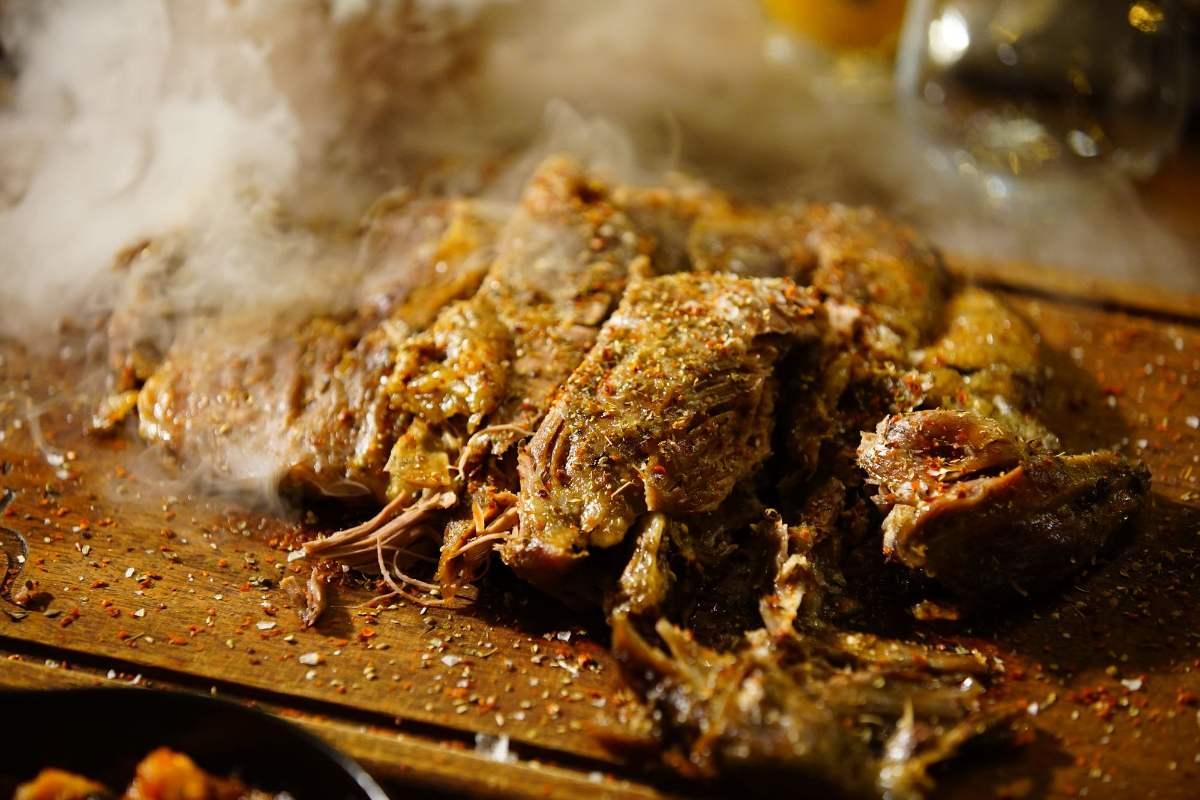
Both methods can turn tough cuts of meat tender over an extended period of time, but the results are different. In a crock pot, a pork shoulder or beef chuck sits in liquid with onions, spices, soy sauce or barbecue sauce, and the long hours of cooking break it down into something soft that falls into the sauce.
With sous vide, you pick the texture by picking the temperature. Serious Eats’ sous vide pulled pork recipe cooks pork shoulder at 165°F for 18 to 24 hours for meat that shreds and stays moist, or at 145°F for 18 to 24 hours for pork that is tender but firm enough to slice. The same recipe notes that a 200°F bath makes the pork fall apart in a few hours, but most of the moisture leaks into the bag, so the meat ends up dry. It then finishes the pork in a 300°F oven for about 1 1/2 hours to build a bark.
For large roasts that you want pink in the middle, sous vide is the better choice. Our sous vide sirloin tip roast and wagyu ribeye steak recipes show what the method does with beef. For a pot of pulled pork for a crowd, either works, and the crock pot is the simpler path.
Equipment and Convenience
A slow cooker is a single appliance. You add the food, add the liquid, put the lid on and choose a setting. There is no bag, no sealing and usually no finishing step, which makes it the most convenient option for weeknight soups and stews. Slow cookers come in different sizes, and the USDA suggests checking the instruction booklet for the sizes of meat and poultry your model can handle.
Sous vide takes a little more setup. You need a sous vide cooker or sous vide circulator, a sous vide container or large pot, and bags. A vacuum sealer and vacuum bags, or sturdy zipper bags with the air pressed out, hold the food. Dry ingredients and dry foods such as rubs and salt go into the bag with the food, but you skip the large amount of liquid a crock pot recipe needs. Afterward, you usually sear the food at high heat in a skillet, which adds a pan to wash.
Both cooking styles leave you free for most of the cooking process. The difference is that sous vide gives you a wide finish window, while a crock pot dish is best served soon after it is done.
Food Safety for Both Methods
The USDA’s slow cooker guidance gives a few clear rules. Always thaw meat or poultry before it goes into a slow cooker. Keep perishable food refrigerated until you start, put vegetables in first because they cook slower than meat, and keep the lid on. If possible, cook on High for the first hour and then switch to Low, although cooking on Low the whole time is also safe. If the power goes out while you are away, throw the food out even if it looks done.
For leftovers, the USDA says to refrigerate them in shallow covered containers within two hours, not to reheat them in a slow cooker, and to reheat them on the stove, in a microwave or in an oven to 165°F. A preheated slow cooker can then keep the food hot for serving at 140°F or higher.
With sous vide, safety depends on both temperature and time. Food held in the USDA’s danger zone of 40°F to 140°F for too long allows bacteria to grow, which is why Serious Eats caps steak cooked below 130°F at two and a half hours. Follow tested time and temperature charts from a trusted source, and chill any food you are not eating right away.
Which Is the Better Choice for You
The biggest differences come down to the food you cook most often.
- Choose sous vide if you cook steaks, pork chops, chicken breasts or fish and want the same doneness every time, or if you like to hold food for a dinner party and sear it just before serving.
- Choose a crock pot if you make soups, chili, beans, stews and braises, want a meal ready when you get home, and prefer one pot with minimal effort and nothing to finish.
- Own both if you cook a mix of both. They do not replace each other, because one cooks to a temperature and the other cooks in liquid.
If you are planning a menu around either method, our guide on how to host a dinner party covers make ahead dishes, and wine and food pairing will help you choose a bottle for a slow braised roast or a seared steak. More recipes and guides are collected on our wine and culinary page.
FAQ
Is sous vide the same as slow cooking?
No. Both are low temperature cooking methods, but sous vide holds the water at the exact temperature you want the food to reach, while a slow cooker heats a covered pot at a range the USDA puts at about 170°F to 280°F, so the food keeps cooking past any set doneness.
Can a sous vide machine replace a crock pot?
Only partly. Sous vide can make tender pulled pork at 165°F for 18 to 24 hours, according to Serious Eats, but it does not make soups, chili or stews in a pot of sauce the way a crock pot does.
Which is better for steak?
Sous vide. Serious Eats cooks medium rare steak at 129°F to 134°F for 1 to 4 hours, then sears it. A slow cooker runs well above those temperatures, so a steak would be well done.
Is it safe to leave a slow cooker on all day?
Yes. The USDA says it is safe to cook on Low the entire time, for example while you are at work, and that food stays safe as long as the cooker is operating. If the power goes out while you are away, discard the food.
Sources, read 22 November 2026: USDA FSIS, Slow Cookers and Food Safety; Serious Eats, The Food Lab’s Complete Guide to Sous Vide Steak; Serious Eats, Sous Vide Pork Chops; Serious Eats, Sous Vide Barbecue Pulled Pork Shoulder; USDA FSIS, Danger Zone.
Continue Exploring Luxury
Everything you need for wine, food and entertaining, in one place.
📖 Get the Free Luxe Living Starter Guide