How to Put Pepperoni on a Charcuterie Board: 6 Ways
This post contains affiliate links. If you click through and make a purchase, I may earn a small commission at no extra cost to you. As an Amazon Associate I earn from qualifying purchases.
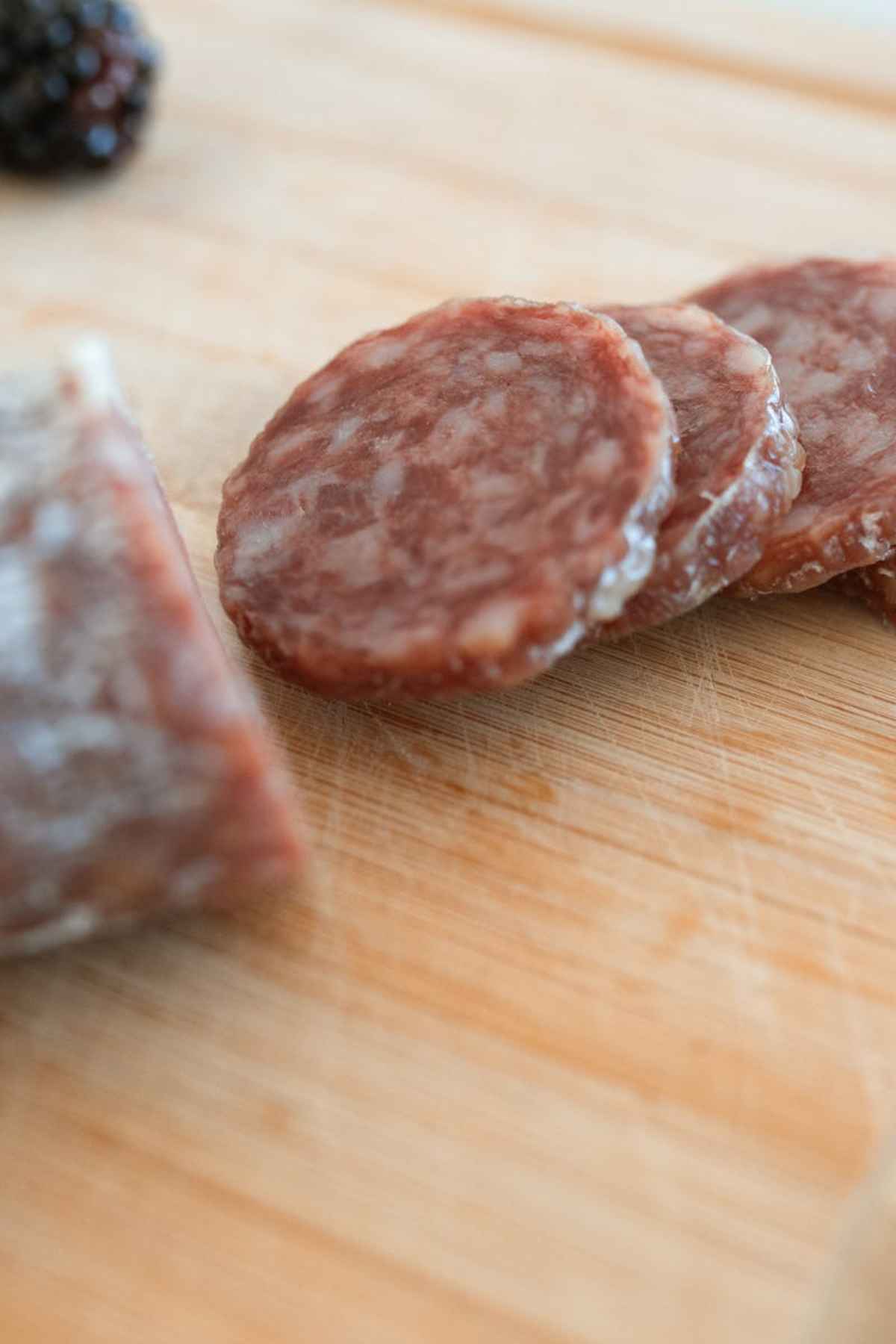
The easiest ways to put pepperoni on a charcuterie board are to fold the slices into quarters and tuck them in rows, fan them into a long line that winds across the board, or shape them into pepperoni roses using the rim of a glass. A champagne flute or wine glass makes a large rose, and a shot glass makes small rosebuds. Each method takes a few minutes with plain round slices and no special tools, and you can mix two or three of them on the same board.
Below are six ways to arrange pepperoni, how to make each one, and how to keep the board safe to eat at your next party. For the full build, from cheeses to crackers, see our guide on how to make a charcuterie board.
In This Guide
- 1. Pepperoni Roses Made With a Glass
- 2. Mini Rosebuds With a Shot Glass
- 3. Folded Quarters
- 4. A Pepperoni River
- 5. Shingled Rows and Rings Around Small Bowls
- 6. Pepperoni Skewers
- Making Ahead and Food Safety
- FAQ
1. Pepperoni Roses Made With a Glass
Meat roses, also called charcuterie roses or salami roses, are the most popular way to dress up pepperoni, and they show up all over social media. The same method works for pepperoni and for hard salami or Italian dry salami.
- Choose a champagne flute or a wine glass. The size of the glass sets the size of the rose: a narrow rim gives a tight rose, a wide rim gives a larger rose.
- Lay the first slice so that about half of it sits above the rim of the glass and half folds over the outside of the glass.
- Add the next slice so it overlaps the first, and keep going around the rim to finish the first layer.
- Start a second layer slightly lower on the glass, overlapping the slices of the first layer the same way. Add a third layer if you want a fuller rose.
- Place the palm of your hand over the top of the glass, turn the glass upside down onto the board, and lift the glass away. Gently open the outer petals with your fingers.
Thin, round slices fold more easily than thicker cuts, so use sliced deli pepperoni or salami rather than chunks cut from a stick. Set one large rose in the center of the board or two or three roses at the corners, and fill the gaps around them with cheese and fresh fruit.
2. Mini Rosebuds With a Shot Glass
A shot glass works the same way as a wine glass, with fewer slices per layer, and gives smaller flowers that fit a small charcuterie board or a snack board for two. Mini rosebuds are a good fit beside small ramekins of olives, mustard or jam, or tucked into the gaps between cheeses. They also suit a Valentine’s Day or Mother’s Day board.
3. Folded Quarters
This is the fastest method and the easiest way to fill a large grazing board. Fold each pepperoni slice in half, then in half again so it forms a small fan shape. Stand the folded pieces in a row with the rounded edges facing up, or tuck them into the spaces between cheeses and crackers. Guests can pick them up with their fingers, and they hold their shape well.
4. A Pepperoni River
A river is a long line of folded or overlapping slices that winds across the board in an S shape. Fold each slice in half, then lay them in a long line, each slice leaning on the one before. Build the cheeses, fruit and crackers along both sides of the line. It gives the board a clear shape and works well on a long rectangular cutting board.
5. Shingled Rows and Rings Around Small Bowls
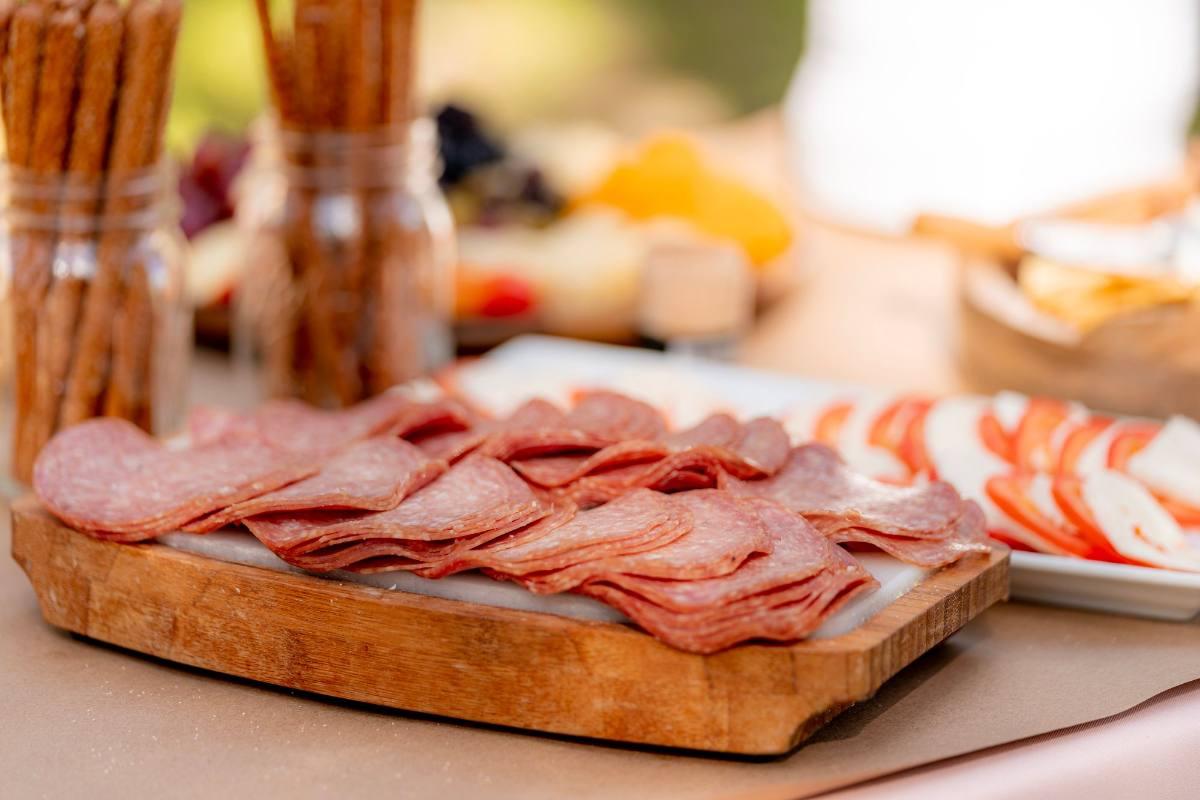
Shingling means laying flat slices so each one overlaps the next, like roof tiles. Lay a straight shingled row along one edge of the board, or curve the slices into a ring around a small bowl of dip, olives or marinated mozzarella. The ring frames the bowl and keeps the pepperoni close to whatever pairs with it. This method suits a cheese plate or an appetizer tray where you want a neat, simple look.
6. Pepperoni Skewers
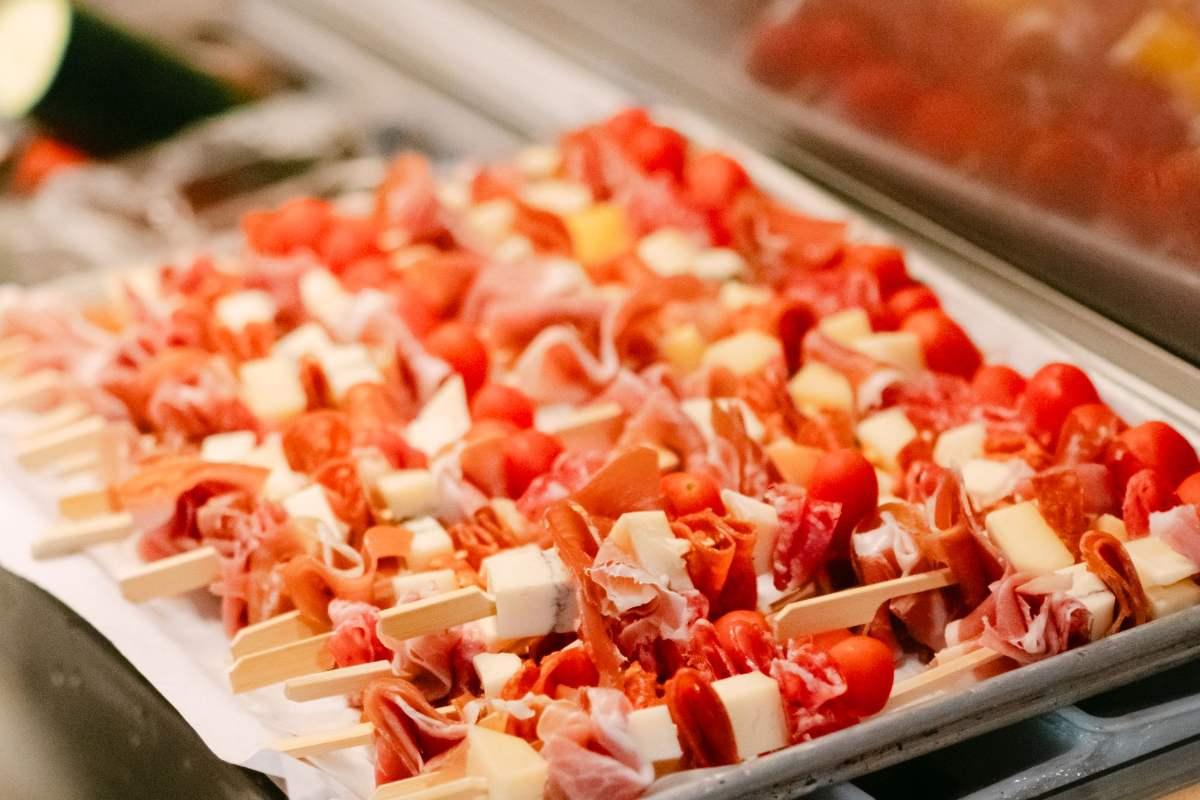
Skewers turn the board into a great appetizer for a standing crowd. Fold a pepperoni slice into quarters and thread it on a short skewer with a cube of cheese, an olive and a cherry tomato or a basil leaf. Lay the finished skewers in a row across the board or stand them in a glass. For a fresh version without meat for guests who do not eat pork, our caprese skewers use the same idea.
Making Ahead and Food Safety
You can shape pepperoni roses and folded pieces a few hours ahead. Place them on a plate or in an airtight container, cover them with plastic wrap, and keep them in the refrigerator until you build the board. The USDA advises keeping cold food at or below 40°F and never leaving perishable food out of refrigeration for more than 2 hours, or more than 1 hour when the temperature is above 90°F, according to its Danger Zone guidance. For a long party, set out a smaller board and refill it from the refrigerator.
For more board ideas, see our heirloom charcuterie board and breakfast charcuterie board ideas. To choose a bottle, our guide on what to drink with charcuterie covers wine and other drinks, and how to host a dinner party helps plan the rest of the evening.
FAQ
What glass is best for pepperoni roses?
A champagne flute or a wine glass works well for a full rose, because the narrow rim keeps the center tight. A shot glass makes small rosebuds. The wider the rim, the larger and looser the rose.
Can you use salami instead of pepperoni?
Yes. Every method here works with thinly sliced salami, including hard salami and Italian dry salami. Larger salami slices make larger roses.
How long can a pepperoni charcuterie board sit out?
No more than 2 hours, or 1 hour if the room or outdoor temperature is above 90°F, based on the USDA Danger Zone guidance for perishable food.
Source, read 22 November 2026: USDA FSIS, Danger Zone (40°F to 140°F).
Continue Exploring Luxury
Everything you need for wine, food and entertaining, in one place.
📖 Get the Free Luxe Living Starter Guide