Elevated Hosting: Easy Caprese Skewers & The Perfect Wine Pairing
This post contains affiliate links. If you click through and make a purchase, I may earn a small commission at no extra cost to you. As an Amazon Associate I earn from qualifying purchases.
Caprese skewers are one of the most underrated tools in the elevated hosting repertoire. Hosting should not mean spending three hours stressed out in the kitchen while your guests mingle without you. True luxury hosting is not about elaborate preparation, it is about high-quality ingredients, simple execution, and being present with the people you invited over.
At Luxury Infusion, we believe the best dinner parties feel effortless. The host pours wine, laughs at the right moments, and quietly produces beautiful food that took ten minutes to assemble. The secret is choosing the right combination of ingredients and the right wine to bring them together.
As a WSET-certified wine guide, I have learned that the right wine pairing can make a five-minute appetizer taste like a five-star experience. Caprese skewers are the perfect example: three premium ingredients, zero cooking, and a glass of well-chosen white wine to elevate the whole moment.
What are caprese skewers? Caprese skewers are a simple, elegant appetizer made by threading fresh cherry tomatoes, small mozzarella balls (bocconcini), and fresh basil leaves onto small wooden skewers. They are typically drizzled with a high-quality olive oil and balsamic glaze before serving.
This guide walks through how to source the right ingredients, how to assemble the skewers properly, and exactly which wine to pour alongside them for an entertaining moment that feels considered without being complicated. Think of it as a mini primer on wine and food pairing rules applied to one of the most elegant five-minute appetizers in the hosting playbook. Whether you are hosting an intimate dinner for four or a larger gathering, mastering this combination will become one of the most reliable tools in your entertaining repertoire.
The Secret to Elevated Appetizers: Ingredient Quality

Use four-inch bamboo appetizer skewers or cocktail picks. These are available at most kitchen supply stores and online.
For each skewer, thread one cherry tomato first, then fold a fresh basil leaf in half lengthwise and thread it next (folding gives the basil a neat, layered appearance and keeps it from slipping), then finish with one mozzarella ball. The order matters aesthetically, the red tomato at the base, green basil in the middle, and white mozzarella at the top creates a visual flag effect that reads as polished and intentional.
Repeat this process for as many skewers as your board requires. For a party of eight, twelve to sixteen skewers is a generous serving. For a dinner party of four where this is one of several appetizers, eight to ten skewers is appropriate.
3. Arrange and Drizzle
Arrange your finished skewers on a beautiful ceramic plate or a wooden serving board. The serving surface matters more than most hosts realize. A weathered olive wood board or a cream-colored ceramic platter instantly elevates the visual presentation. If you are building out your hosting aesthetic, a collection of well-chosen boards and platters is one of the foundational investments covered in our Quiet Luxury Decor guide.
Do not add the finishing elements until you are ready to serve. The drizzle should happen at the very last moment before the board reaches your guests. Drizzle the finishing olive oil in a thin stream across all the skewers, then follow with the balsamic glaze in a controlled zigzag pattern. Finish with a pinch or two of flaky sea salt (Maldon is the standard recommendation). The flaky salt adds texture and a bright mineral contrast that ties everything together.
The Perfect Wine Pairing for Caprese Skewers
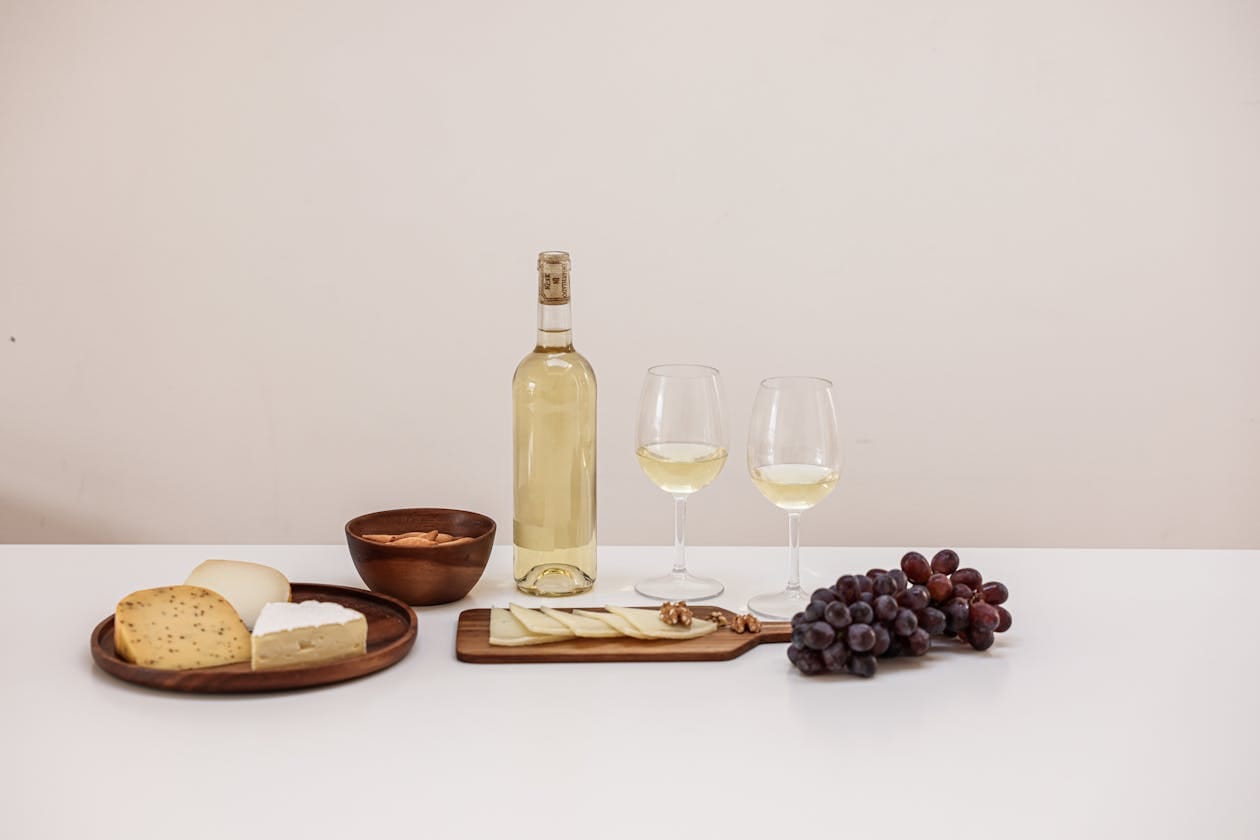
Choosing the right wine for caprese skewers is not complicated, but it requires understanding one specific characteristic of the dish. Once you know what you are working with, the pairing becomes almost automatic. If you want to go deeper on the principles behind this, our complete wine library covers food and wine pairing at every level.
The Challenge: Tomato Acidity. Fresh tomatoes are one of the most acidic ingredients in the culinary world. When you pair a wine with high acidity from tomatoes, wines that are low in acidity taste flat and metallic against them. The tomato essentially strips the fruit from a low-acid wine and leaves only the tannins and a dull mineral quality. This is the core problem that most casual hosts run into when they simply open whatever bottle is on the counter.
The Solution. The key principle in pairing with acidic foods is to match acid with acid. A crisp, high-acid white wine will hold its own against the tomato acidity rather than being flattened by it. The acid in the wine also performs a secondary function: it cuts through the richness of the fresh mozzarella and refreshes the palate between bites.
Here are three wines that work beautifully with caprese skewers, ranging from the classic choice to a more visually impressive option for summer entertaining.
Sauvignon Blanc. This is the textbook pairing for caprese skewers and for good reason. Sauvignon Blanc is one of the highest-acid white wines available, and its characteristic herbal notes, which range from freshly cut grass to green herbs to citrus zest, complement the fresh basil in a way that feels intentional and considered. A Loire Valley Sauvignon Blanc (Sancerre or Pouilly-Fume) or a New Zealand version from Marlborough both work exceptionally well. The grape’s natural acidity matches the tomato, and the herbal character bridges to the basil.
Pinot Grigio. If you are hosting a mixed group where wine preferences vary, Pinot Grigio is the safe and genuinely smart choice. It is a lighter-bodied, high-acid white wine with a clean, neutral flavor profile that does not compete with the food. An Italian Pinot Grigio from Alto Adige or Friuli has enough acidity to handle the tomato while remaining approachable for guests who might describe themselves as casual wine drinkers. For more on building your core wine vocabulary, see our Beginner’s Wine Guide.
Dry Rose. For summer hosting, a dry Provence rose is a sophisticated choice that also adds considerable visual appeal to your entertaining setup. A pale, salmon-colored rose in a clean-stemmed glass next to the caprese board creates an effortless tablescape. The key word is dry, a sweet rose will clash with the tomato acidity rather than complement it. Stick to Provence-style roses for this pairing.
What to Avoid. Heavy, tannic red wines are a poor match for caprese skewers. The tannins in a wine like Cabernet Sauvignon interact with the acid in fresh tomatoes to create a harsh, metallic taste that overwhelms the delicate mozzarella and flattens the basil. This is the single most common pairing mistake with Italian-style appetizers. Save the Cabernet Sauvignon for a grilled steak, where the tannins have fat and protein to bind to.
Building out a full appetizer spread? A beautiful charcuterie serving board gives these skewers the presentation they deserve. Complete your board with the best pickles for charcuterie, which pair especially well alongside fresh cheese and the same crisp white wines recommended here.
Shop the Post
Affiliate links. We may earn commission.
Crystal Red Wine Glasses, Set of 4
Four 15 oz hand blown crystal glasses.
View on Amazon →Le Chateau Crystal Wine Decanter
Hand blown lead free crystal, 750 ml capacity.
View on Amazon →Vacu Vin Wine Saver Pump
Vacuum pump and stopper for resealing open bottles.
View on Amazon →Ivation 12 Bottle Compressor Wine Fridge
Compressor wine cooler that holds 12 bottles.
View on Amazon →Frequently Asked Questions
Can I make Caprese skewers the night before?
You can assemble Caprese skewers up to 12 hours in advance and store them in an airtight container in the refrigerator. However, do not add the olive oil, balsamic glaze, or sea salt until immediately before serving, or the tomatoes will become soggy and the basil will wilt.
What kind of mozzarella is best for skewers?
The best mozzarella for Caprese skewers is fresh “bocconcini” or “ciliegine.” These are small, bite-sized balls of fresh mozzarella packed in water, which perfectly match the size of a cherry tomato.
What wine goes best with Caprese salad?
The best wine to pair with a Caprese salad or skewers is a crisp, high-acid white wine like Sauvignon Blanc or Pinot Grigio. The acidity in the wine is necessary to balance the high acidity of the fresh tomatoes and the richness of the mozzarella.
Want to make every gathering feel effortless? Download The Luxe Living Starter Guide for more curated hosting tips, wine basics, and elegant habits.
Continue Exploring Luxury
Everything you need for wine, food and entertaining, in one place.
📖 Get the Free Luxe Living Starter Guide