
7 Entryway Ideas That Make an Unforgettable First Impression
This post contains affiliate links. If you click through and make a purchase, I may earn a small commission at no extra cost to you. As an Amazon Associate I earn from qualifying purchases.
What an Entryway Is Actually Trying to Do
Great entryway decor ideas serve two purposes: An entryway has two jobs. The practical one: give coats, bags, keys, and shoes somewhere to live. The experiential one: set the tone for everything beyond it. Most homes execute the practical job adequately and ignore the experiential one entirely. The result is a space that communicates nothing, or worse, communicates disorganization, before the guest has seen any other room. An entryway that works does both. Storage is present but not dominant. The styling establishes a mood. And the transition from outside to inside feels like an arrival rather than an afterthought.
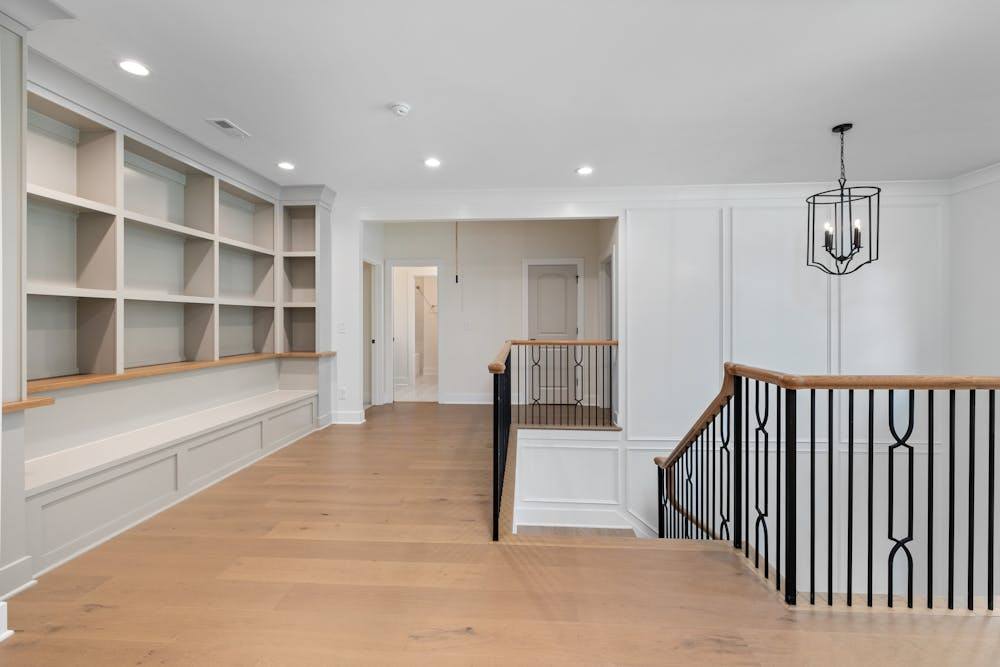
For more luxury styling inspiration, explore our home and interiors guide, coffee table styling ideas, and bedroom aesthetic ideas.
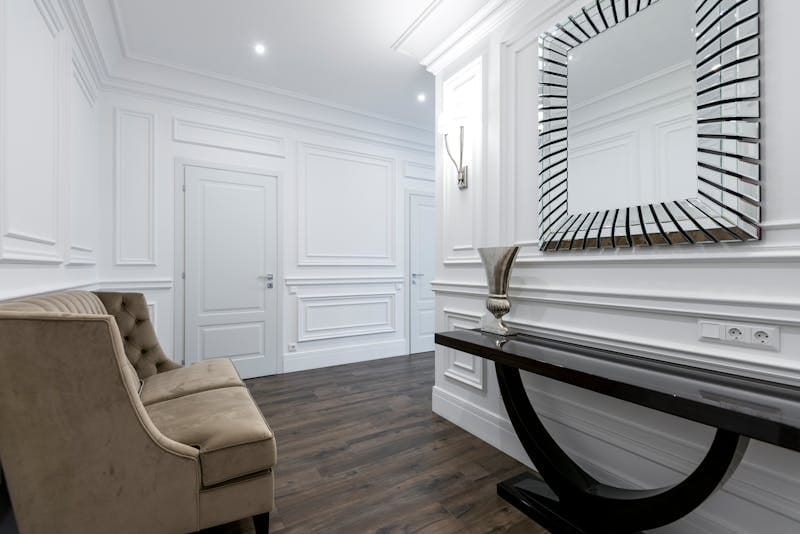
1. A Console Table as the Anchor
The console table is the most functional piece of furniture in any entryway because it provides a horizontal surface without taking up the floor space a full piece of furniture would require. The console should be proportional to the wall. In a narrow entry, a shallow console (10 to 12 inches deep) reads as intentional rather than crowded. Style the top simply: one lamp on one side, a small tray for keys, and one object. The lamp is the most important element, it provides the warm, welcoming light that no overhead fixture can replicate. These entryway decor ideas start with the essentials.
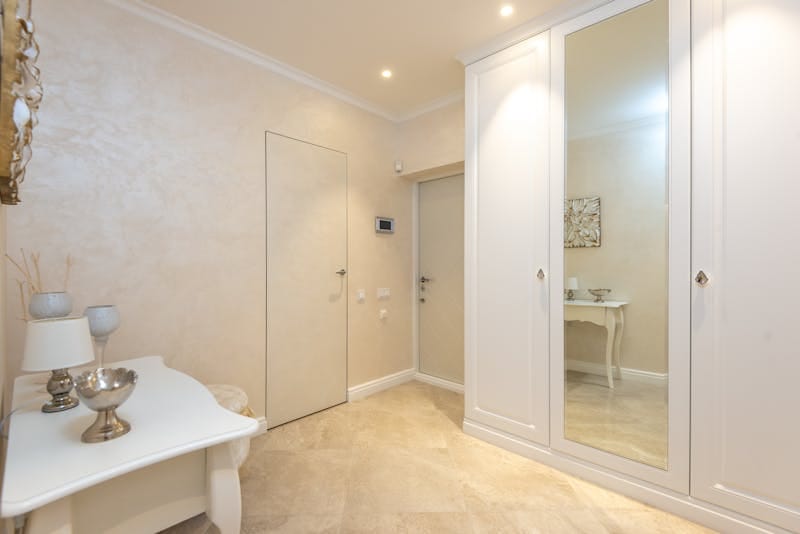
Set the tone with a beautiful console table or narrow entryway table that anchors the entire space.
2. A Mirror That Makes the Space Feel Larger
A mirror in an entryway does something no other piece can do: it reflects light back into the space and creates the impression of depth in a room that is usually narrow and poorly lit. The mirror should be large enough to be useful, at minimum, large enough to check your full face before leaving. The frame matters as much as the mirror itself. In a quiet luxury entryway, an aged gold or natural wood frame reads correctly. In a more contemporary space, a simple black or brushed metal frame. The mirror is one of the pieces where the frame does the aesthetic work.
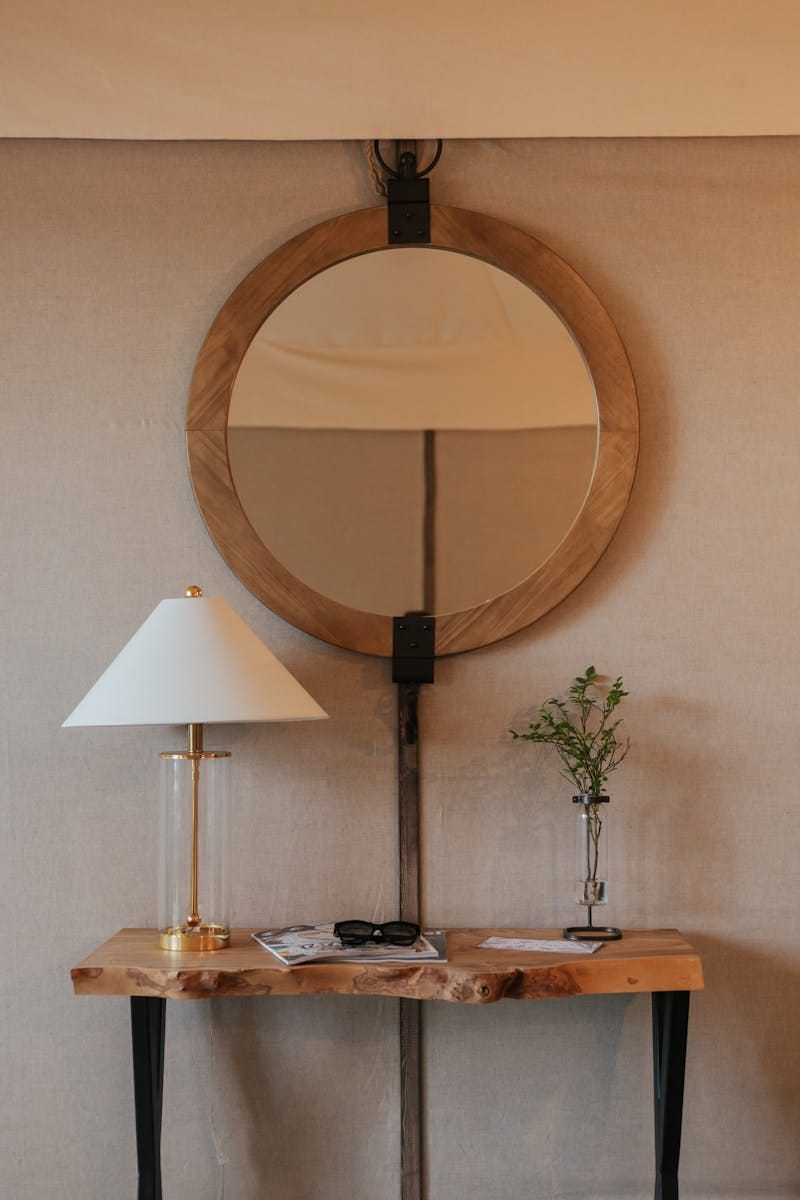
An arched or classic framed mirror instantly opens up a small entryway and doubles its visual impact. Among all entryway decor ideas, mirrors rank near the top.
3. Lighting at Eye Level, Not Overhead
Overhead lighting in an entryway, particularly a single flush-mount ceiling fixture, is the least flattering and least welcoming light source available. It casts light downward, creates shadows on faces, and communicates function rather than welcome. The alternative is a lamp on the console table, a pair of sconces flanking the mirror, or a pendant hung at a lower-than-standard height. Any of these creates the warm, welcoming quality that overhead light cannot. If the overhead fixture is not replaceable, plug in a console lamp and use both.
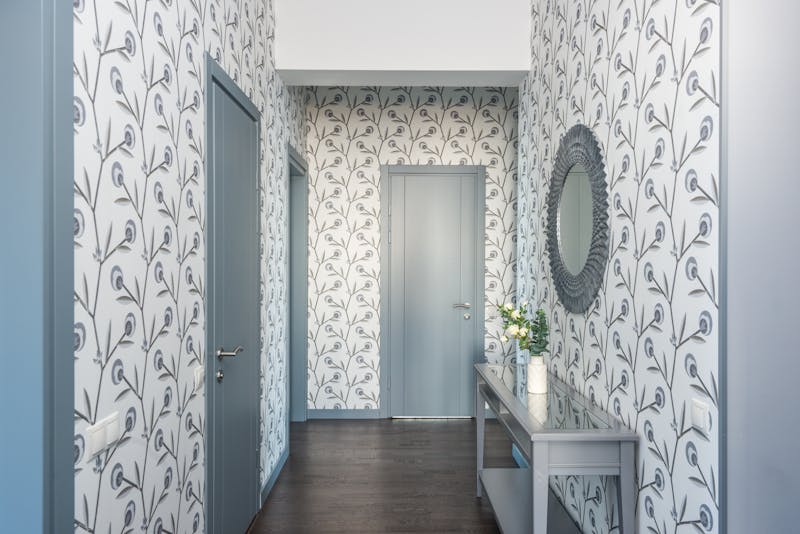
Replace harsh overhead fixtures with a warm table lamp or wall sconce for entryway to create immediate elegance.
4. One Arrangement at Eye Level
The entryway styling object that does the most work per square inch is a single arrangement at eye level on the console, a vase of stems, a potted plant, or a sculptural botanical element. It does not need to be large. A narrow bud vase with three stems, a small potted olive tree, or a single branch in a wide-mouthed vessel. The organic element adds the quality that manufactured objects cannot: something living and slightly irregular that makes the space feel genuinely inhabited. Change it seasonally, the core styling stays the same, the organic element rotates. The best entryway decor ideas use layers of light and texture.
5. A Rug That Defines the Transition
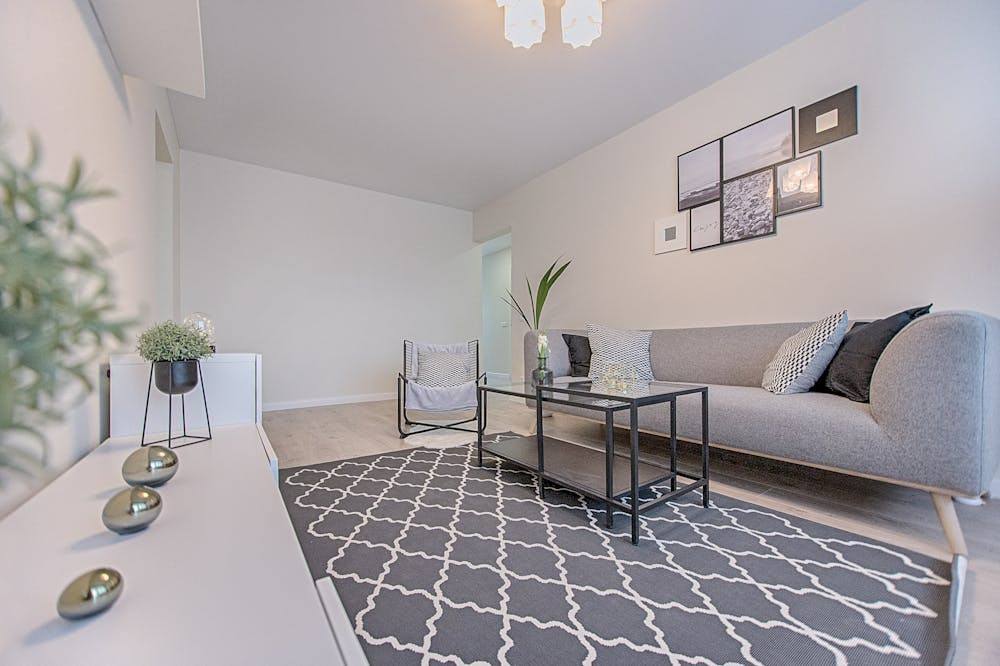
A rug in the entryway does two things: it defines the entry zone as its own space, and it provides the visual separation between outside and inside. In a small entry, a runner in a warm neutral works well. In a larger foyer, a fuller rug creates a room-within-a-room quality. The rug should be durable enough for foot traffic and washable if possible. Avoid anything too light in color directly at the door, it will look dirty within weeks.
For the hard floor beneath the rug, material choice matters just as much as rug choice. If your entryway suits the French country aesthetic, our guide to French country flooring covers the best stone, tile, and hardwood options that define the look.
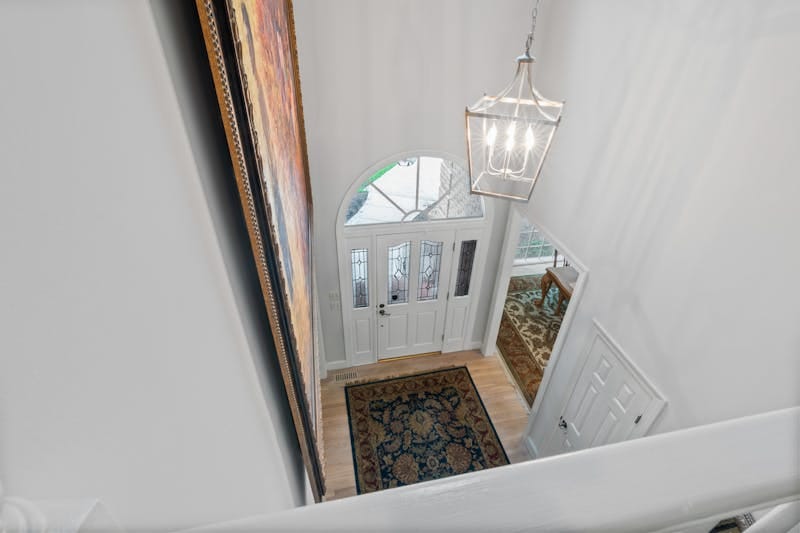
Define the arrival zone with an entryway runner or washable area rug in a neutral tone that anchors the space.
6. Hidden Storage for the Practical Pieces
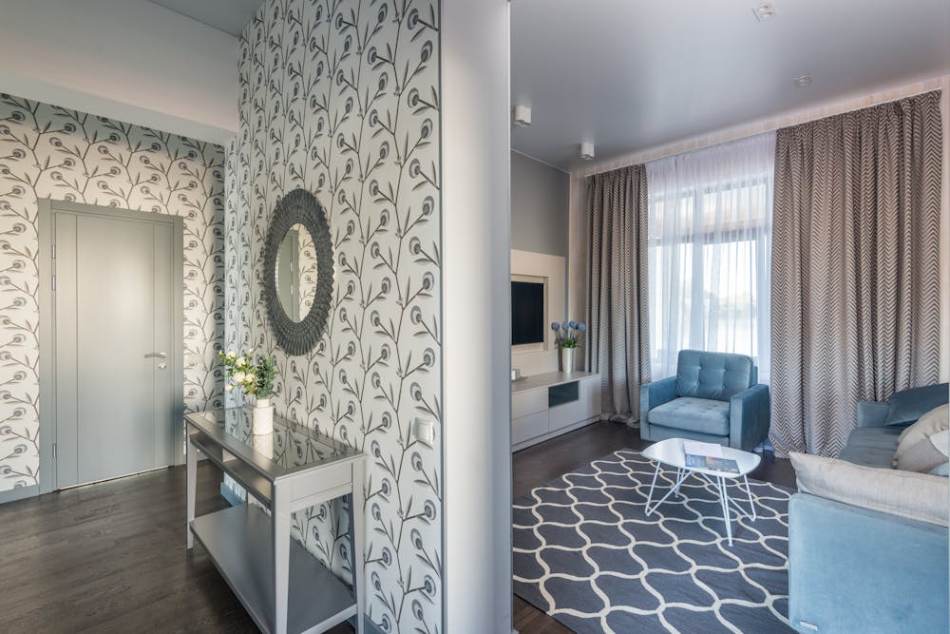
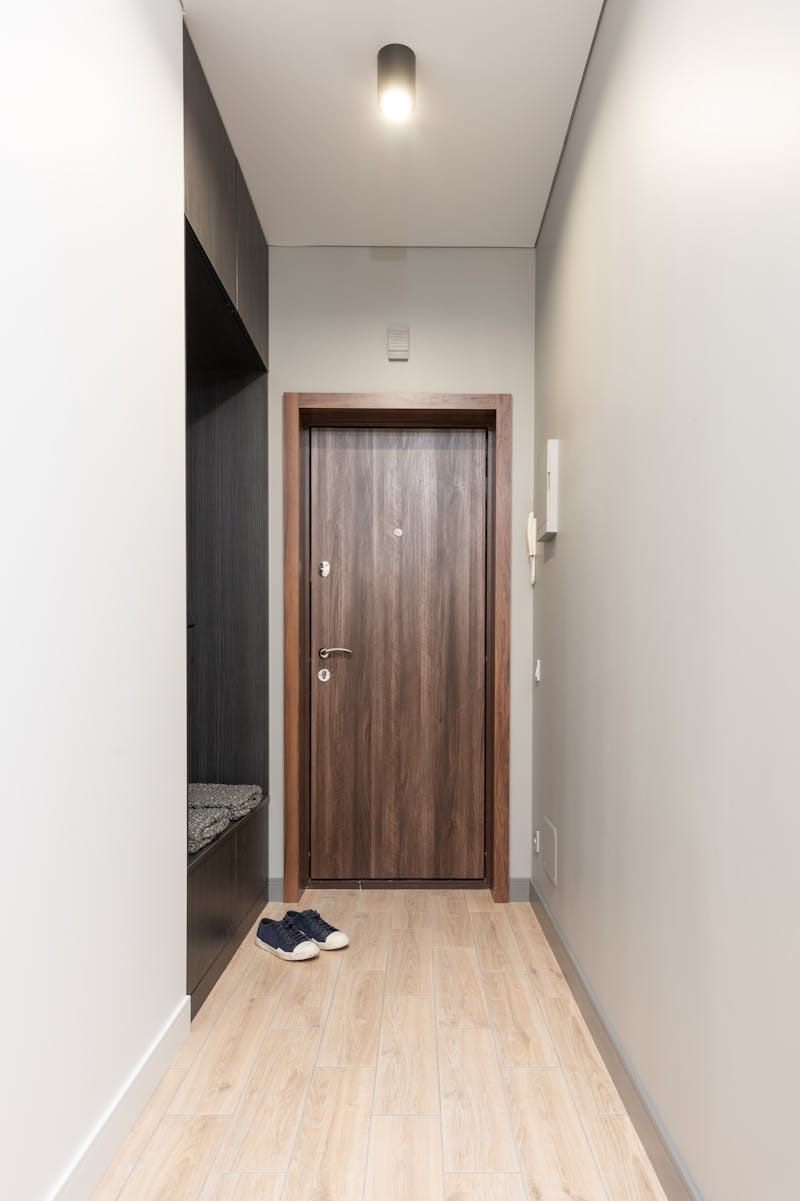
The pieces that destroy an entryway aesthetically are almost always the practical ones: shoes left on the floor, bags hung on door handles, coats draped over a chair that was never meant to hold coats. The solution is not to eliminate these things but to give them somewhere intentional to live. A narrow bench with storage underneath, a set of hooks mounted at the right height, a lidded basket for shoes, a deep drawer for keys. When the practical pieces have designated homes, the visible surface of the entryway stays styled and the space works both functionally and aesthetically. Seasonal entryway decor ideas keep the space feeling fresh.
Finish the first impression with a reed diffuser or luxury candle for entryway, scent is what guests remember most.
Keep things functional without sacrificing style, an entryway bench with storage or set of wall hooks handles coats, bags, and shoes invisibly.
7. Scent as the First Impression
Before the guest sees anything, they smell something. The scent that meets someone at the door is the first sensory experience of a home, and it is almost entirely ignored in most home design conversations. A reed diffuser near the door, a candle on the console table, or a linen spray on the rug, any of these creates a deliberate olfactory welcome. The scent should be subtle, clean, and consistent with what the rest of the home smells like. Choose one quiet scent and use it consistently in this space. Over time, the scent becomes associated with arrival and welcome. Personal entryway decor ideas reflect who lives in the home.
Frequently Asked Questions
What furniture do you need in an entryway?
The three most functional pieces are a console table, a mirror, and some form of storage for shoes and bags. In a very small entry, a narrow console with a mirror above it handles all three jobs at once. In a larger space, a console plus a separate bench with hooks creates a more complete entry zone. The lamp is not a piece of furniture but it is arguably the most important single addition to any entryway.
How do you style a small entryway?
Small entryways benefit from a mirror, which creates the impression of more space, and a very shallow console or floating shelf. Keep objects minimal, one lamp, one tray, one arrangement. A runner rug in a light tone with a subtle pattern adds warmth without visually shrinking the space further.
What kind of rug is best for an entryway?
Durable, washable, and proportional to the space. Flat-weave wool, jute, and indoor-outdoor rugs all handle foot traffic well. A runner in a warm neutral with texture is the most versatile choice. Avoid light solids at the door, they show dirt immediately. A pattern or a darker tone near the entry point makes more practical sense. Functional entryway decor ideas balance storage with aesthetics.
What is the best lighting for an entryway?
A table lamp on the console table is the highest-impact change available in any entry. If the space allows, flanking wall sconces on either side of a mirror create a welcoming, hotel-quality feel. Overhead lighting alone is the worst option, it flattens the space and misses the warmth that makes a welcome feel genuine.
How do you make an entryway feel luxurious on a budget?
A mirror and a lamp are the two highest-return investments and neither requires significant spending. A large mirror, even a simple leaning mirror, changes the scale and light quality of any entry. A warm lamp on a console, shelf, or even a stool creates the quality that overhead lighting cannot. Those two changes, plus cleared surfaces, will make almost any entry feel significantly more considered.
For more home decor inspiration, explore our guide to luxury bedroom aesthetic ideas These entryway decor ideas work in any size space.
Continue Exploring Luxury
Everything you need for wine, food and entertaining, in one place.
📖 Get the Free Luxe Living Starter Guide