7 French Country Furniture Pieces Worth Buying (and What to Skip)
This post contains affiliate links. If you click through and make a purchase, I may earn a small commission at no extra cost to you. I only recommend products and services I personally use and trust.
French country furniture is one of the most imitated aesthetics in home decor, and one of the most frequently gotten wrong.
The look has a specific logic — aged natural materials, handcrafted details, a palette that reads warm and faded rather than bright — and the mass market version of it misses that logic almost entirely. The result is furniture that gestures toward the aesthetic without achieving it, rooms that feel like a theme rather than a place.
This guide covers seven specific pieces that carry the French country look authentically, what to look for in each, and the pieces that are commonly associated with the aesthetic but actively undermine it.
Having sourced French country furniture across different price points and lived with the results, the pieces that hold up over time share two qualities: they are made from real materials, and they have some evidence of age or handcraft built into them.
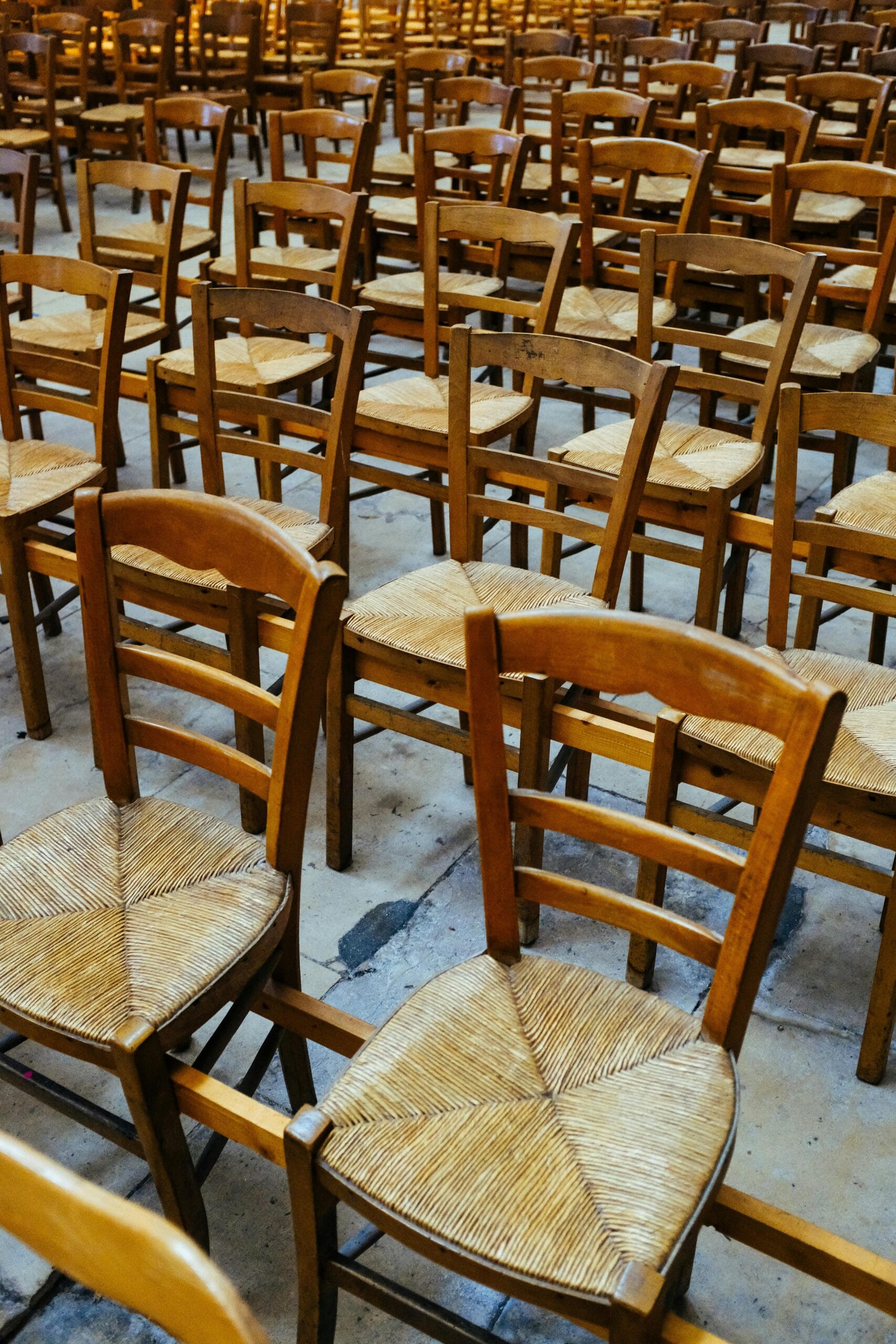
Table of Contents
What French Country Furniture Actually Is
Before the seven pieces, one distinction worth making: French country furniture is not the same as French provincial furniture, farmhouse furniture, or shabby chic.
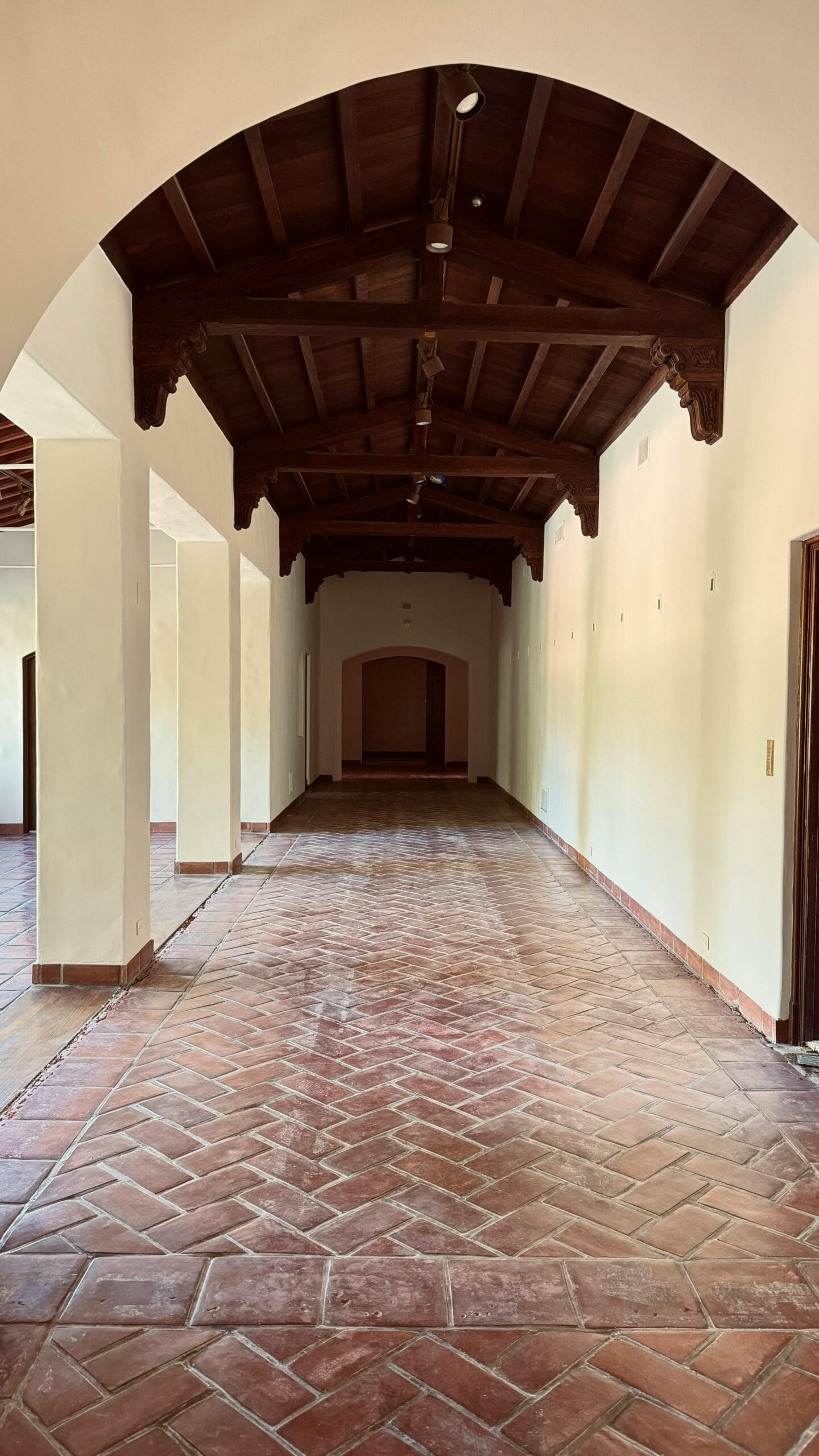
French country draws specifically from the Provence region — the south of France — and the materials and palette that define that landscape. Aged oak, wrought iron, rush seat chairs, linen and toile upholstery, stone and terracotta on the floors. The colors are warm and sun-bleached: ochre, sage, lavender, terracotta, soft white.
French provincial is more formal — the furniture of the French court translated for country houses, with more carved detail and a slightly more refined silhouette. Farmhouse is more rustic and less refined. Shabby chic takes the distressed finish and applies it without the material integrity underneath.
French country is the sweet spot: warmth, craft, natural materials, and a sense that the furniture has been used and loved rather than newly purchased.
1. The Rush Seat Chair
The rush seat dining chair is the single most iconic piece of French country furniture, and the one that does the most work in establishing the aesthetic.
Rush — a woven natural fiber — was used in French provincial chairs for centuries because it was available, durable, and beautiful. The weave pattern, the slight variation in tone, and the way it ages are all qualities that synthetic alternatives cannot replicate. A room with rush seat chairs reads as genuinely considered. A room with chairs that imitate rush reads as trying.
What to look for: natural rush rather than paper rush or synthetic fiber, a beech or oak frame rather than pine, and joinery that feels solid rather than assembled. The chairs should have some weight to them.
For authentic rush seat dining chairs: rush seat dining chair set — look for natural rush fiber with a beech or oak frame.
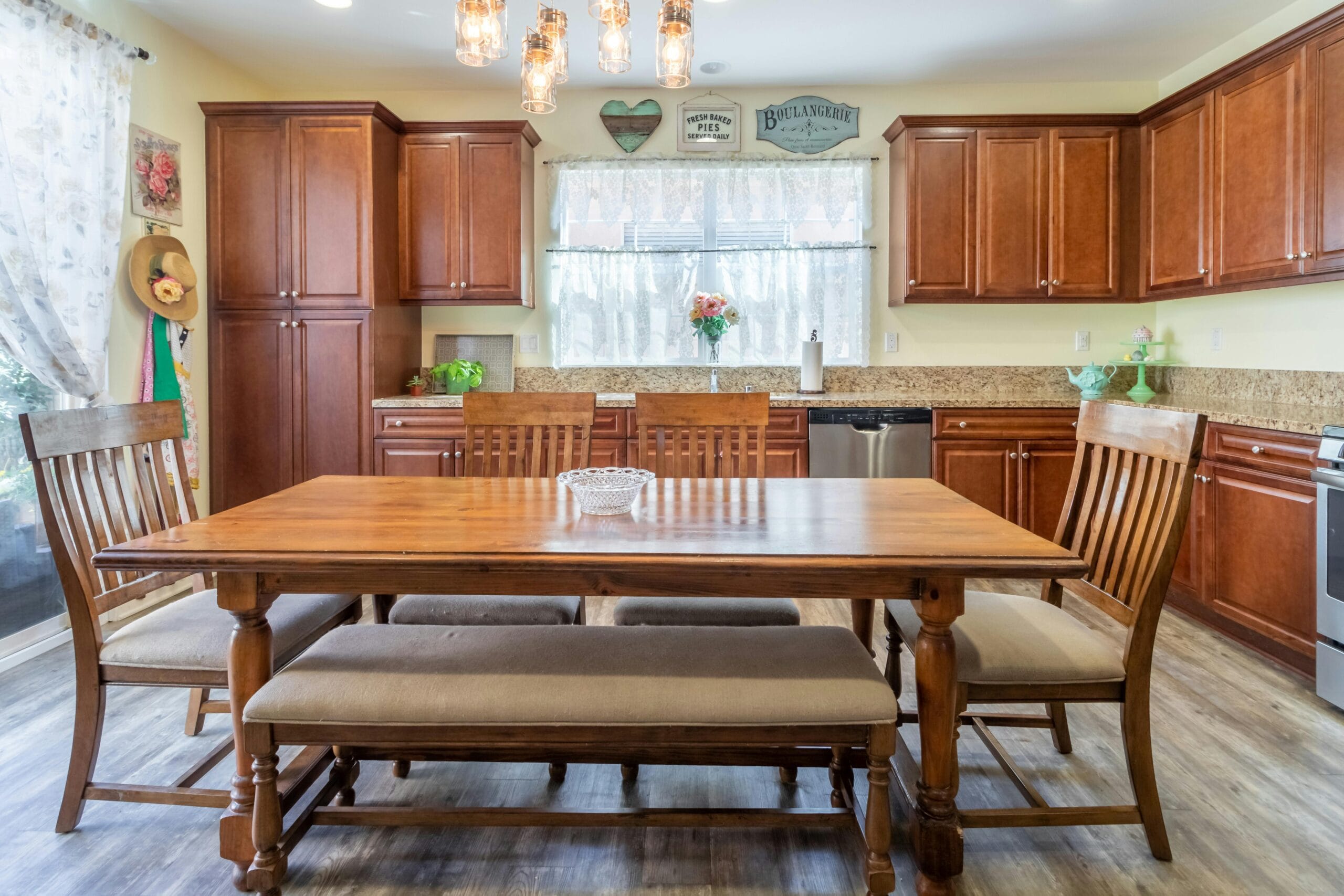
2. The Farm Table in Oak or Pine
The farm table is the anchor of a French country dining room, and it is one of the pieces where buying well once is significantly better than replacing a lesser piece twice.
A genuine farm table — wide planks, substantial legs, a surface that shows the grain and character of the wood — ages in a way that improves rather than deteriorates. The scratches and marks it accumulates become part of its quality rather than evidence of wear.
What to look for: solid wood throughout (not veneer, not engineered wood), visible grain and natural variation in the planks, and legs that are mortise-and-tenon jointed rather than bolted. The table should feel heavy. If it feels light, it is not what it is claiming to be.
The finish should be oiled or waxed rather than lacquered — lacquer seals the wood and prevents the patina from developing. An oiled finish feeds the wood and allows it to age correctly.
For a solid wood farm table: solid wood farmhouse dining table — prioritize solid construction over veneer.
3. The Armoire
The French armoire is the piece most associated with the aesthetic and the one most commonly imitated badly.
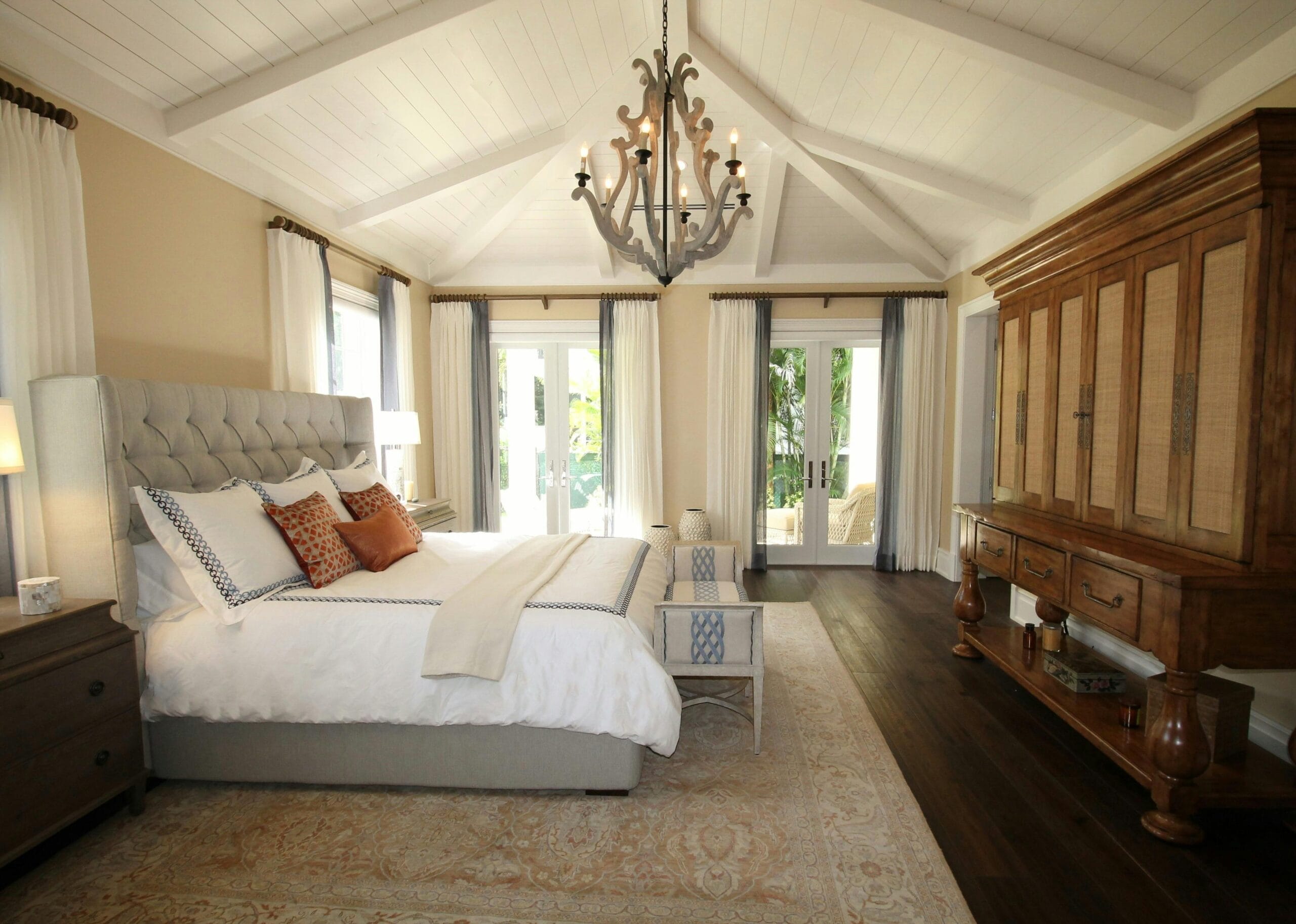
An authentic armoire is a large, solid piece — typically made from oak, walnut, or fruitwood — with carved panel doors, visible hardware in iron or aged brass, and proportions that make it feel like a significant piece of furniture rather than a storage unit with decorative details applied to it.
What to look for: solid wood construction throughout, dovetail joinery on the interior, and hardware that is attached with genuine screws rather than glued or stapled. The doors should hang true and close with a satisfying weight. The interior should smell like wood rather than manufactured board.
In a French country bedroom, the armoire serves as both storage and architectural element — it is large enough to read as a piece of furniture that the room was designed around, which is exactly what it should feel like.
4. The Bergère Chair
The bergère is the upholstered armchair of the French country interior — a wide, deep seat with an exposed wood frame and cushioned back and sides. It is the chair that invites you to sit for longer than you intended.
Where a rush seat chair is utilitarian and honest, the bergère is comfortable and slightly more formal. A room that has both — rush seats at the dining table, a bergère or two in the living room — achieves the balance between the practical and the comfortable that defines French country interiors at their best.
What to look for: an exposed beech or oak frame rather than fully upholstered sides, cushions that are removable and recoverable, and a seat depth of at least 20 inches. Upholster in linen, toile, or a small-scale floral that reads warm rather than busy.
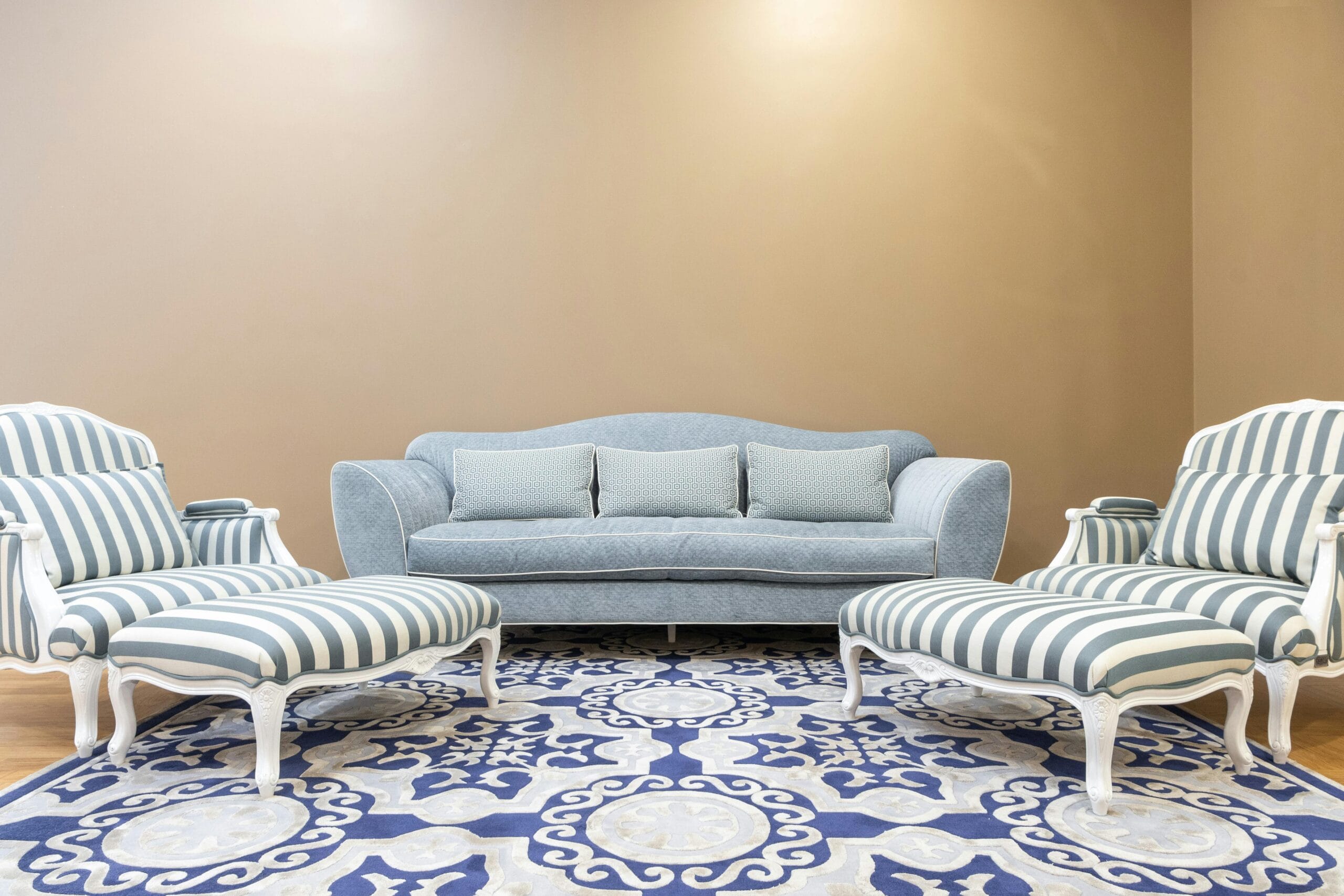
For a bergère or French country armchair: bergère or French country armchair — look for exposed wood frame and removable cushions.
5. The Buffet or Sideboard
The French country buffet is a lower, wider piece of storage furniture — typically in oak or fruitwood — that sits against a dining room or kitchen wall and holds linens, serving pieces, and the accumulated objects of a household that actually uses its dining room.
Unlike a formal sideboard, which tends toward symmetry and polish, the French country buffet has more character and variation. The drawers may not all be the same size. The hardware may have been replaced at some point. The top may have the marks of hot dishes and daily use.
This is not a flaw. It is the evidence that the piece has been in a room where life happens, and that quality is exactly what makes it work in a French country interior.
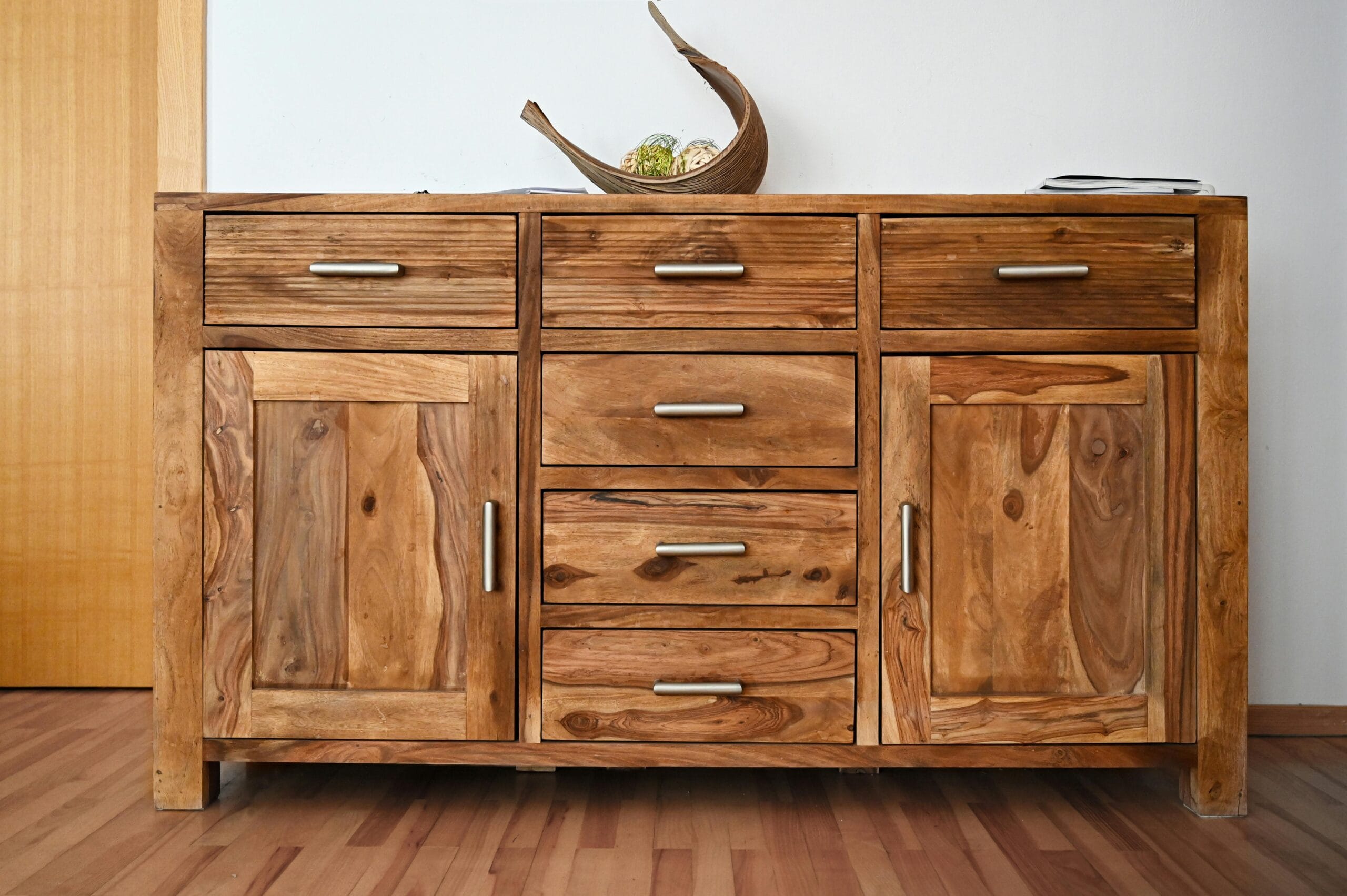
For a French country sideboard or buffet: French country sideboard or buffet — oak or natural wood finish with aged hardware.
6. The Iron Chandelier or Pendant
Lighting in a French country interior is almost always iron — wrought iron chandeliers, iron pendant lights, iron candlestick holders — because iron was the material available to craftsmen in the French countryside for centuries and its visual weight reads correctly in rooms with stone floors and aged wood.
A good iron chandelier in a French country dining room or kitchen does something no other fixture can: it anchors the ceiling plane and connects the room to the aesthetic without requiring everything else in the room to do the same amount of work.
What to look for: genuine wrought iron rather than cast iron or steel, visible hammer marks or hand-finishing details, and a finish that reads dark and warm rather than shiny. The candle sleeves should be wax-drip style rather than smooth cylindrical.
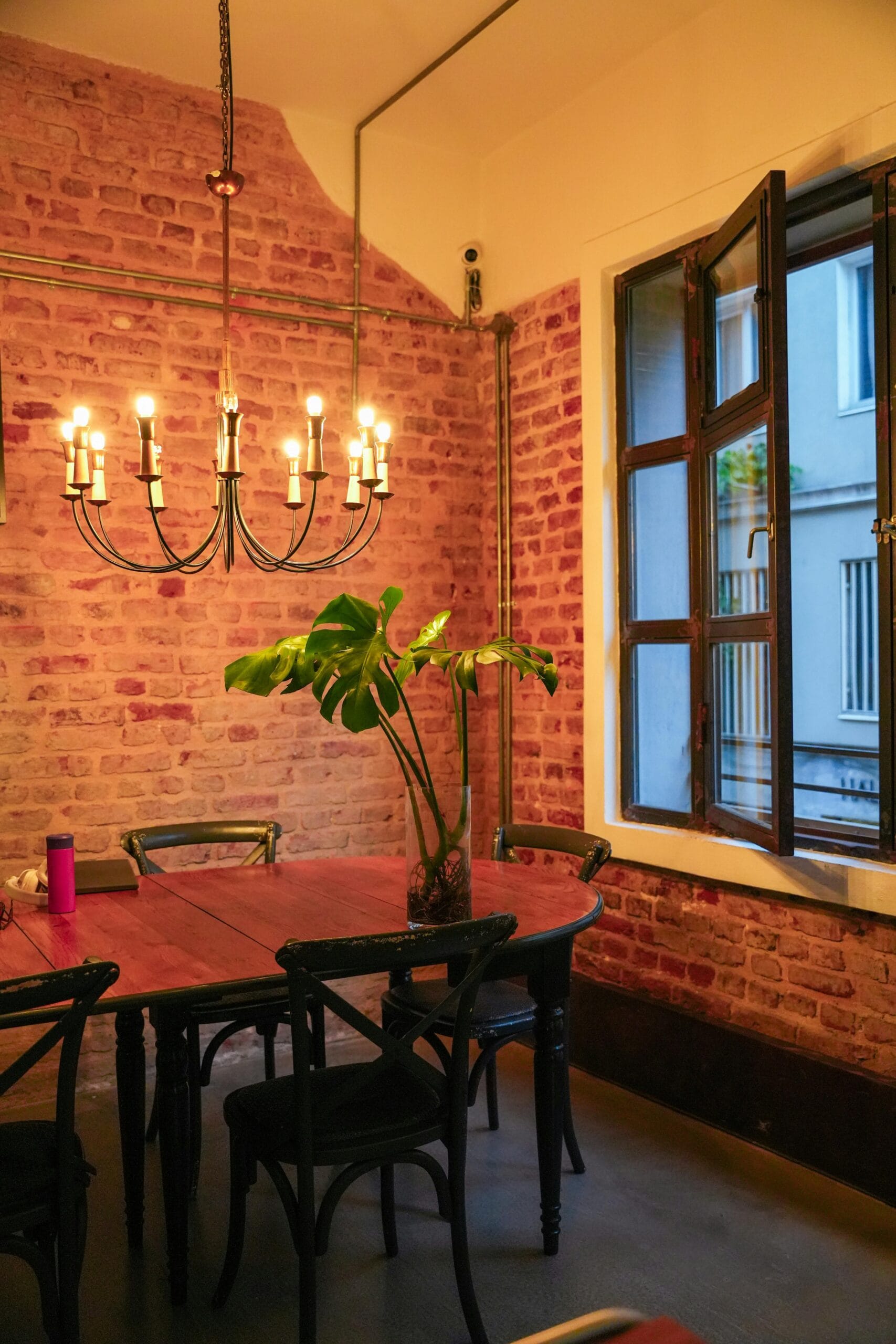
For a French country iron chandelier: French country iron chandelier — look for dark finish with candle-style bulbs.
7. What to Skip
Several pieces are commonly associated with French country furniture but actively undermine the look when bought in their mass-market versions.
Distressed white painted furniture — when the distressing is uniform and machine-applied, it reads as a costume rather than genuine age. If you want painted furniture in a French country interior, it should be painted by hand in a chalky flat finish with distressing that follows the natural wear points: edges, corners, drawer pulls.
Wicker and rattan — these are Mediterranean coastal materials, not specifically French country. They work in some French country interiors but they are not defining pieces of the aesthetic, and cheap versions read as beach house rather than Provence.
Toile de Jouy on everything — toile is a genuinely French fabric and it belongs in a French country interior, but only in small doses. A single toile cushion or a toile bed canopy reads correctly. Toile wallpaper, toile curtains, toile upholstery, and toile table linens in the same room reads as a theme park.
Related guides in this series: French Country Flooring, French Country Fireplace Mantels, and French Provincial Fabric.
Frequently Asked Questions
What is the difference between French country and French provincial furniture?
French country furniture comes from the rural farmhouses and country estates of Provence — it is warm, rustic, and made from natural materials including oak, rush, and iron. French provincial furniture refers to the style that developed in French country houses during the 17th and 18th centuries, which takes the formal elements of Versailles-era furniture and simplifies them for a provincial setting. Provincial is more refined and carved than country, and sits closer to traditional French antique furniture.
What wood is used in French country furniture?
Oak is the most common and most authentic choice for French country furniture — Architectural Digest documents this consistently across their French country interior features. Walnut, fruitwood (particularly cherry and pear), and pine are also used depending on the region and the piece. The wood is typically finished with oil or wax rather than lacquer, which allows it to develop patina over time.
Can French country furniture work in a modern home?
Yes, provided the modern home has some warmth in its palette and materials. French country furniture sits uncomfortably in rooms with cool grays, high-gloss surfaces, and very contemporary architecture. In rooms with warm neutrals, natural stone or wood flooring, and layered textiles, French country pieces integrate naturally and add the quality of age and craft that contemporary furniture rarely provides.
Where is the best place to source authentic French country furniture?
Antique markets, estate sales, and dealers who specialize in European antiques are the best sources for genuine pieces. In the United States, dealers in larger cities often carry imported French antiques. Online, 1stDibs and Chairish both carry vetted French antique and vintage pieces at various price points. For reproductions, look for pieces made from solid wood with hand-applied finishes rather than factory distressing.
What colors work best with French country furniture?
The palette that works best with French country furniture is warm and muted: ochre, sage green, soft terracotta, warm white, lavender, and the warm gray of aged stone. Avoid cool grays, bright whites, and jewel tones — these clash with the warm, sun-bleached quality of authentic French country materials.